
|
Getting your Trinity Audio player ready...
|
By: Christian Ahodie Yaw- Volta Region.
Ghana recorded US$4.34 billion in tourism receipts in 2025, but for communities protecting waterfalls, forests, mountains and cultural sites, the big question is whether the tourism boom is translating into roads, jobs, investment and sustainable development.
Ghana’s tourism industry has every reason to celebrate. In 2025, the country recorded approximately 1.31 million international tourist arrivals and generated about US$4.34 billion in tourism receipts. The figures point to the enormous economic potential of tourism and its capacity to bring foreign exchange, create jobs, support businesses and promote Ghanaian culture to the world.
But behind the impressive statistics lies a difficult question that deserves national attention: what happens to the value generated by tourism after the visitors arrive, and how much of it reaches the communities where Ghana’s natural and cultural treasures are found?
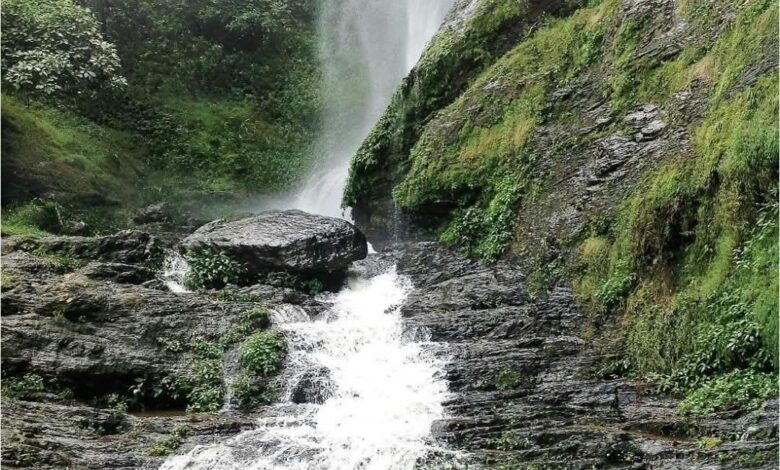
The question becomes even more important when one travels beyond Ghana’s major tourism centres. In many communities, waterfalls continue to flow without proper visitor facilities, mountains remain difficult to access, roads leading to attractions are poorly developed, internet connectivity is unreliable, accommodation is limited, restaurants are scarce and young people living around these destinations continue to struggle to find sustainable livelihoods.
This creates a contradiction. Ghana is earning billions from tourism, yet some of the very places that make the country attractive to visitors remain underdeveloped.
The US$4.34 billion figure must also be understood correctly. It represents tourism receipts generated by international visitors across the economy; it is not money that simply goes into government coffers. The spending covers accommodation, transport, food, entertainment, attractions, shopping and other tourism-related services.
That distinction makes the more important question one of value retention and distribution.
How much of the money remains in Ghana? How much reaches local businesses? How much goes to communities? How much is reinvested in tourist sites? How much is used to improve roads, sanitation, electricity, internet connectivity and visitor facilities?
And perhaps most importantly, what can Ghana do to make each tourist contribute more to local economic development?
Tourism should not be measured only by how many people arrive at Kotoka International Airport. It should also be measured by how long visitors stay, how far they travel, how much they spend and how many Ghanaian businesses and communities benefit from their spending.
A tourist who arrives in Accra, spends a few days in the capital and leaves creates economic value. But a tourist who travels to the Volta Region, stays in a locally owned guesthouse, hires a local guide, eats local food, buys crafts, visits waterfalls, experiences traditional culture and spends several days moving between communities creates a much wider economic footprint.
That is the tourism model Ghana should pursue.
The country already has an institutional mechanism for tourism development. The Tourism Development Fund, financed mainly through the one per cent tourism levy, is intended to support tourism infrastructure, marketing and promotion, research, entrepreneurship, education, training and other tourism development activities.
This means the conversation cannot stop at tourism receipts. There must also be a serious national conversation about the infrastructure and investments required to make Ghana’s destinations competitive.
A tourist site without a good access road is an incomplete tourism product.
A waterfall without clean toilets and waste-management facilities is an incomplete tourism product.
A mountain destination without safe trails, signage and trained guides is an incomplete tourism product.
A community attraction without accommodation and restaurants is an incomplete tourism product.
And in the digital age, a tourist destination that cannot be easily found online is also an incomplete tourism product.
The Volta Region provides a powerful example of both Ghana’s tourism potential and the gaps that still need to be addressed.
The region possesses mountains, waterfalls, forests, wildlife, rivers, cultural heritage and community-based tourism attractions. Tafi Atome Monkey Sanctuary has become one of the better-known examples of community-based ecotourism, demonstrating how conservation and community participation can create economic opportunities.
But even at destinations with an established tourism identity, there remains room for significant improvement in accommodation, restaurants, visitor experiences, marketing and investment.
The opportunity is enormous.
If visitors come to Tafi Atome only to see the monkeys and leave within a few hours, the economic benefit is limited. But if the destination offers quality accommodation, local food, guided walks, cultural performances, crafts, agricultural experiences and other activities, visitors can stay longer and spend more.
Every additional night means income for a guesthouse.
Every meal creates income for a food vendor or restaurant.
Every guided tour creates employment.
Every craft purchased supports an artisan.
Every local transport service creates income.
That is how tourism becomes a community economy.
The same principle should be applied to lesser-known attractions across the region.
In Mafi Avakpedome in the Central Tongu area, for instance, War
Rock, locally known as Kpedzi oo Kpedzi, represents the type of natural and cultural asset that could benefit from systematic development, documentation and promotion.
The attraction draws people, particularly during periods such as Easter, yet the broader challenge remains the same: how can attractions that already have cultural and community interest be transformed into properly managed destinations?
There are also attractions around Amedzofe in Ho West and other parts of the Volta Region with enormous potential for mountain, waterfall, adventure and eco-tourism.
The problem is not that Ghana lacks attractions.
The problem is that many attractions have not been connected to the infrastructure, investment and marketing required to turn them into strong tourism destinations.
This is where roads become important.
A road leading to a tourist attraction should not be viewed only as a transport project. It is also an economic investment in tourism.
If the final stretch of a journey is difficult, tourists may be discouraged from visiting. If access is improved, however, the same attraction can become part of a larger tourism circuit.
The Volta Region should therefore not market attractions in isolation.
A visitor should be able to purchase a complete tourism experience covering several destinations over several days.
A tourism circuit could connect Ho with Amedzofe, Afadzato, Wli, Tafi Atome and other cultural and natural attractions.
Instead of asking tourists to visit one attraction and return to Accra, Ghana should give them reasons to stay for three, four or five days.
This would increase spending across hotels, restaurants, transport services, tour operations, craft businesses and other local enterprises.
The digital economy offers another major opportunity.
The modern tourist searches online before travelling. Visitors want maps, photographs, videos, reviews, prices, opening hours, accommodation information, contact numbers and directions.
Ghana’s tourism authorities have begun embracing digital transformation, including the development of systems intended to make tourism information more accessible.
The next challenge is to ensure that lesser-known attractions are not left behind.
Every viable tourist site should eventually have a verified digital presence, GPS location, professional photographs, visitor information, contact details, entrance fees, accommodation options and information about local guides.
Reliable internet connectivity at major tourist destinations should also become part of tourism infrastructure.
A visitor who can immediately share photographs and videos from a waterfall or mountain is not simply enjoying the experience. That visitor is marketing Ghana to thousands of potential travellers.
There is also a critical issue of community ownership.
Who owns the land on which tourist attractions are located?
Who protects the forests?
Who maintains the sites?
Who provides the cultural knowledge?
Who benefits when the attraction becomes commercially successful?
Communities and traditional authorities should not become spectators in the tourism economy.
Where communities provide the land, culture, natural resources or conservation work, they must have a clearly defined role and a fair share of the benefits.
Young people living around tourist sites should be trained and employed as guides, conservation workers, digital marketers, photographers, drivers, chefs and hospitality professionals.
Women should be supported to establish food businesses, craft enterprises, accommodation facilities and other tourism-related ventures.
Farmers should be connected to hotels and restaurants so that tourism creates demand for locally produced food.
This is how tourism can become an instrument for rural development.
Corporate Ghana also has an important role to play.
Banks, telecommunications companies, mining companies, hotels, airlines, beverage companies and other major businesses could adopt selected tourist destinations as part of structured corporate social responsibility programmes.
A company could provide solar lighting.
Another could support internet connectivity.
Another could finance sanitation facilities.
Another could train tour guides.
Another could support conservation.
Another could help develop a visitor centre.
Another could finance digital marketing.
Such an initiative could be developed as an “Adopt a Tourism Destination” programme, with measurable targets and transparent reporting.
Foreign investors and development partners should also be given clearer opportunities to invest in emerging tourism destinations.
Investment should not be concentrated only in Ghana’s already-famous tourism centres.
There is enormous potential for eco-lodges, boutique accommodation, restaurants, adventure parks, canopy walks, camping facilities, cultural villages, agro-tourism, wellness tourism and mountain tourism in other parts of the country.
Government does not necessarily have to build everything itself.
Its role should increasingly be to create the enabling environment, provide infrastructure, establish clear regulations, facilitate responsible investment and protect communities and the environment.
The private sector can then bring capital, technology, management expertise and innovation.
But development must be sustainable.
Ghana cannot promote tourism by destroying the attractions tourists have come to see.
Waterfalls must be protected from pollution.
Forests must be conserved.
Mountains must be protected from uncontrolled development.
Waste must be properly managed.
Sacred and cultural sites must be treated with respect.
Tourism development must improve the environment rather than degrade it.
This is particularly important for the Volta Region, where eco-tourism and nature-based tourism form a major part of the region’s potential.
The country must therefore move from simply identifying tourist attractions to developing tourism ecosystems.
Such an ecosystem would bring together government, traditional authorities, district assemblies, communities, investors, tour operators, hotels, transport companies, farmers, artisans and young people.
Everyone should have a role.
Everyone should have responsibilities.
And everyone should see benefits.
The next stage of Ghana’s tourism development should also introduce stronger measures of success.
Instead of celebrating only tourist arrival numbers, authorities should monitor average length of stay, visitor expenditure, local business participation, jobs created, community revenue, domestic tourism growth, investment attracted and conservation outcomes.
These indicators would provide a clearer picture of whether tourism is genuinely transforming communities.
The US$4.34 billion tourism receipt figure should therefore be viewed not only as an achievement but also as a challenge.
It tells us that the market exists.
It tells us that people are willing to spend money in Ghana.
It tells us that tourism has the capacity to generate foreign exchange.
It tells us that there is an opportunity to create jobs.
The task now is to capture more of that opportunity and spread it more widely.
Ghana must ask why a visitor should spend only a few hours at a tourist attraction when they could spend several days in the surrounding community.
It must ask why young people living beside major attractions should remain unemployed.
It must ask why roads leading to economically promising destinations should remain inadequate.
It must ask why a tourist should struggle to find information about attractions that have existed for generations.
It must ask why communities that have protected natural resources should not have a meaningful economic stake in their development.
And it must ask whether tourism revenue is being reinvested sufficiently in the destinations that sustain the industry.
These are not questions against tourism.
They are questions for better tourism.
Ghana has already done the difficult part.
The country has the attractions.
It has the culture.
It has the people.
It has the hospitality.
It has the history.
It has the natural beauty.
It has a growing tourism market.
What is needed now is a stronger connection between these assets and economic development.
For the Volta Region, the opportunity is particularly significant.
Tafi Atome, Amedzofe, Afadzato, Wli, Mafi Avakpedome and the many other natural and cultural attractions across the region should not remain isolated places known mainly to local residents.
With the right investment, they can become centres of employment, entrepreneurship, conservation and community development.
The waterfalls should generate income.
The mountains should create jobs.
The forests should support sustainable enterprises.
The cultural sites should create opportunities for artisans and performers.
The communities should benefit.
And the environment should be protected.
That is the real meaning of tourism development.
Because tourism is not simply about bringing people into Ghana.
It is about turning their presence into lasting value for Ghanaian people.
The ultimate test of Ghana’s tourism success should therefore not be how many tourists we welcomed at our borders.
It should be what those tourists leave behind.
Better roads.
Stronger communities.
More jobs.
Growing businesses.
Protected forests.
Improved tourist sites.
Better infrastructure.
Greater cultural pride.
And sustainable livelihoods.
The US$4.34 billion is an impressive figure.
But the bigger opportunity is to ensure that the money generated by Ghana’s tourism economy does not simply pass through the country.
It must circulate.
It must create opportunities.
It must build communities.
It must protect the attractions.
And it must give the next generation a reason to believe that the natural and cultural treasures inherited from their ancestors can become a foundation for their future.
Ghana does not lack tourism resources. What Ghana needs is the commitment to develop, protect and connect those resources to the people.
And until the communities surrounding Ghana’s waterfalls, mountains, forests and cultural treasures can clearly point to the roads, businesses, jobs, infrastructure and livelihoods created by tourism, the story of Ghana’s tourism success will remain only partially told.