
|
Getting your Trinity Audio player ready...
|
By Ahoto John Justice
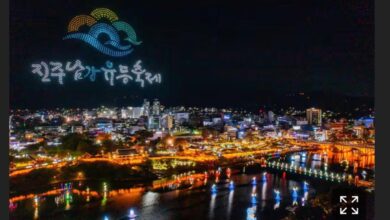
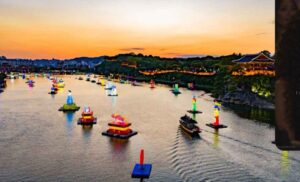
When darkness falls over the Namgang River in October, the water seems to disappear.
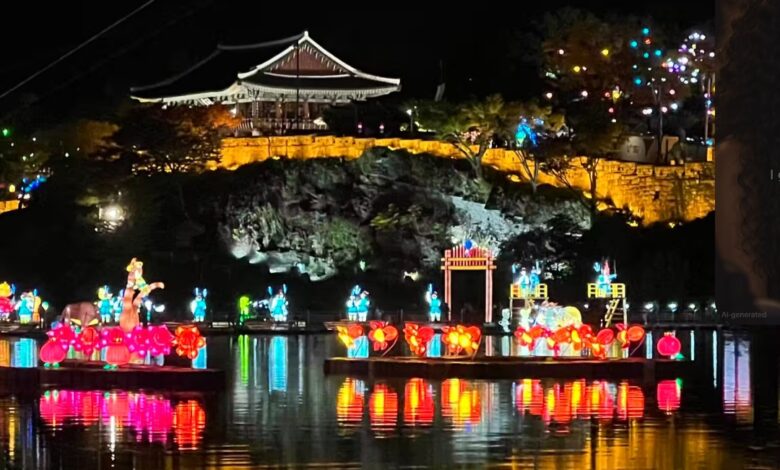
In its place comes a second sky thousands of glowing lanterns floating on the river, carrying wishes, memories and messages while illuminating the historic city of Jinju in South Korea.
That spectacle returns this year as the 2026 Jinju Namgang Yudeung Festival, running from October 3 to 18 around Jinjuseong Fortress and the Namgang River.
The 16-day festival is entering a new phase after being selected by South Korea’s Ministry of Culture, Sports and Tourism as one of the country’s three Global Festivals for 2026–2028.
Under the programme, the festival can receive up to 800 million won annually for three years, with the government aiming to strengthen international tourism and help the selected festivals attract more foreign visitors.
The story behind Jinju’s lanterns stretches back more than four centuries.
The festival traces its origins to the 1592 Battle of Jinjuseong Fortress during the Imjin War, when lanterns were floated on the Namgang River as military signals and a means of communication.
The tradition later developed into a way of honouring soldiers, officials and civilians who died during the battles.
Today, the lanterns have become symbols of peace and hope, connecting Jinju’s wartime history with a modern cultural celebration.
That historical connection remains central to the 2026 festival.
Its theme is “River of History, Embracing Peace ,You and Me, We Are The World,” with lantern installations combining traditional Korean culture, contemporary art, global themes and Jinju’s ambitions as an aerospace city.
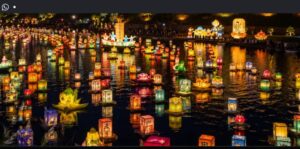
The lanterns will be illuminated from 6 p.m. to midnight, while bridges and festival booths operate from 1 p.m. to 11 p.m.
Among this year’s new attractions is the “Welcome TO Joseon” zone at Jinjuseong Fortress, which combines historical themes with contemporary and playful designs.
Other installations will explore themes ranging from Korean writing and traditional aesthetics to modern art, global festivals, peace, climate change and the future of Jinju.
One section, “Hope for the Earth,” focuses on environmental themes including respect for life, the climate crisis and a sustainable future.
Another, “Future City Jinju,” uses light installations to portray the city’s ambitions as an aerospace and future-oriented city.
The festival will also feature creative lanterns made by local students, cultural performances and hands-on activities.
The river will again provide the stage for some of the festival’s biggest nighttime spectacles.
Official plans include drone light shows on October 3, 10 and 17, with fireworks scheduled for October 3, 9 and 17.
Visitors can also explore food areas and a night market along the riverside, while hands-on programmes include making LED hanbok, traditional paper lanterns and wearable lanterns.
The festival’s programme also includes performances at the music fountain area throughout the 16-day period.
The Global Festival designation comes as Jinju seeks to expand the festival’s international audience.
The city says the festival attracted around 1.6 million visitors in 2025, including about 5,000 foreign visitors. For 2026, it has set a target of 10,000 international visitors.
To support that goal, Jinju plans multilingual visitor services, GPS-based guidance, multilingual kiosks, dedicated facilities for foreign tourists and partnerships with overseas travel companies.
The city has specifically identified markets including Japan, Taiwan and Vietnam for targeted international promotion. It also plans to use online travel platforms and invite foreign influencers as part of its overseas marketing campaign.
The Korean government says its wider Global Festival programme is designed to help the selected festivals at least double their international visitor numbers during the support period.
The lantern festival forms part of a wider October cultural season in Jinju.
The city is also home to the Gaecheon Arts Festival, which began in 1949 as the Yeongnam Arts Festival and is described by Jinju as the beginning of Korea’s regional comprehensive arts festivals.
The Korea Drama Festival is another major October event, creating a broader cultural programme around the lantern celebration.
The combination has helped turn October into an important tourism period for Jinju.
In 2025, KT Big Data analysis recorded 1.67 million visitors across Jinju’s October festivals. When nearby performances and other events were included, the figure reached about 1.72 million.
Another analysis cited by Jinju put the 2025 lantern festival itself at approximately 1.6 million visitors.
For Jinju, the Namgang is more than a scenic backdrop.
It is part of the city’s history.
The river once formed part of the city’s wartime defence and communication system. Today, it has become the centrepiece of a major cultural and tourism event attracting visitors from across Korea and increasingly from abroad.
That transformation gives the festival its distinctive character.
Jinju has taken an element of its past and turned it into a contemporary experience one that combines history, art, tourism, entertainment and the nighttime economy.
The 2026 edition offers another opportunity to see how Jinju continues to turn its historical identity into a living cultural attraction.
From October 3 to 18, the Namgang will once again become a river of light.