
GIABA Calls for Stronger Parliamentary Oversight as Africa Loses Nearly $90 Billion Annually to Illicit Financial Flows

|
Getting your Trinity Audio player ready...
|
By: Samuel Asamoah and Justice Ahoto
West African governments have been urged to strengthen parliamentary oversight, improve public financial management and deepen regional cooperation to stem the growing threat of illicit financial flows, money laundering and corruption that continue to undermine economic development across the continent.
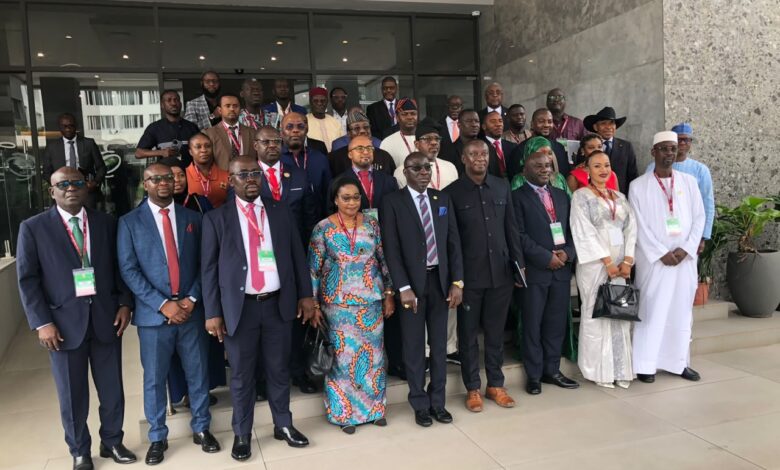
The call came at the opening of the Second Regional Seminar on Preventing Financial Crimes and Enhancing Public Finance Management through Parliamentary Public Accounts Committees (PACs) in ECOWAS Member States, organised by the Inter-Governmental Action Group against Money Laundering in West Africa (GIABA) in Accra.
The three-day seminar has brought together Chairpersons and Members of Public Accounts Committees from ECOWAS member states, alongside representatives of Finance Ministries, Financial Intelligence Units, Supreme Audit Institutions, anti-corruption agencies, development partners and civil society organisations to strengthen legislative oversight and improve accountability in the management of public resources.
Delivering the keynote address, the Director-General of GIABA, Edwin W. Harris Jr., warned that illicit financial flows continue to pose one of the greatest threats to governance, economic stability and regional security in West Africa.
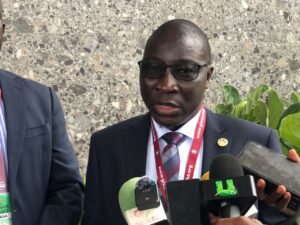
He noted that Africa loses more than US$88.6 billion annually through corruption and illicit financial flows, representing approximately 3.7 percent of the continent’s Gross Domestic Product (GDP). According to him, the losses deprive governments of critical resources needed to provide quality healthcare, education, infrastructure and employment opportunities while creating conditions that fuel organised crime, terrorism and violent extremism.
Mr. Harris said findings from GIABA’s mutual evaluations have revealed persistent weaknesses in procurement systems, beneficial ownership transparency and public financial management across several ECOWAS countries, leaving governments vulnerable to financial crimes.
He identified inflated procurement contracts, ghost workers on public payrolls, trade mis-invoicing, maritime crime, cyber-enabled fraud and the misuse of digital financial platforms among the key channels facilitating illicit financial flows across the region.
Describing Public Accounts Committees as the “constitutional guardians of the public purse,” Mr. Harris stressed that rigorous parliamentary oversight remains one of the most effective tools for preventing corruption and strengthening democratic governance.
He said when lawmakers thoroughly scrutinise public expenditure, interrogate audit findings and demand corrective action, they not only safeguard taxpayers’ money but also dismantle corruption networks and reinforce public confidence in state institutions.
Speaking on behalf of the Minister for Finance, Samuel Arkhurst, Coordinating Director for Technical Services at the Ministry of Finance, described the scale of illicit financial flows on the continent as deeply worrying.
He said available data indicates that Africa loses nearly US$90 billion every year to illicit financial flows, equivalent to about four percent of the continent’s Gross Domestic Product, significantly undermining economic growth and sustainable development.
The Minister observed that resources lost through corruption and financial crimes could otherwise be invested in roads, schools, hospitals and other essential public services capable of transforming lives across the continent.
He therefore called for stronger regional cooperation among ECOWAS member states, saying no single country could effectively combat transnational financial crimes in isolation.
According to him, enhancing collaboration among governments, legislatures, financial intelligence institutions and anti-corruption agencies would strengthen the region’s capacity to detect, prevent and prosecute financial crimes.
A representative of Ghana’s Financial Intelligence Centre (FIC) also underscored the importance of continuous capacity building for members of Public Accounts Committees, saying effective parliamentary oversight depends largely on the technical competence of committee members.
The FIC representative observed that many legislators require regular specialised training to adequately interpret audit reports, identify financial crime indicators and ensure the effective implementation of recommendations contained in Auditor-General’s reports.
He identified inadequate technical expertise, political interference and limited institutional support as major obstacles preventing many Public Accounts Committees from fully discharging their constitutional oversight responsibilities.
According to him, the fight against illicit financial flows must be proactive rather than reactive, insisting that early detection of financial irregularities through effective oversight remains one of the most sustainable approaches to combating corruption.
Also addressing the seminar, Secretary-General of the West Africa Public Accounts Committee Association, Clarence Gahr, said prudent financial management would significantly reduce African countries’ dependence on external borrowing.
He argued that governments would have less need to contract expensive loans if public resources were managed transparently and efficiently.
Mr. Gahr therefore emphasised the need for sustained training and institutional support for members of Public Accounts Committees across the ECOWAS region to improve financial accountability and value for money in public expenditure.
He, however, expressed concern over the frequent turnover of committee members following national elections, noting that the continuous replacement of experienced legislators weakens institutional memory and undermines efforts to build specialised expertise in parliamentary financial oversight.
The seminar will equip participants with practical skills in analysing complex audit reports, identifying corruption red flags, monitoring the implementation of audit recommendations and strengthening collaboration among Public Accounts Committees, Supreme Audit Institutions, Financial Intelligence Units, anti-corruption agencies, civil society organisations and the media.
The meeting is expected to conclude with recommendations aimed at enhancing parliamentary oversight, improving public financial management systems and strengthening regional cooperation in the fight against money laundering, corruption and illicit financial flows across West Africa.