
|
Getting your Trinity Audio player ready...
|
The Ghana WASH Journalists Network (GWJN) has called on the government and key state institutions to take urgent and decisive action to end Accra’s recurring flooding crisis, describing the latest disaster as evidence of long-standing failures in urban planning, environmental management and infrastructure development.
In a statement issued on Wednesday, July 1, and signed by the National Secretary of the network, Samuel Asamoah, expressed sorrow over the recent floods that swept through Accra and surrounding communities, resulting in deaths, destruction of homes and businesses, disruption of economic activities, and displacement of thousands of residents.
GWJN extended condolences to families who lost loved ones and sympathised with those whose properties and livelihoods were affected, stressing that “every life lost to flooding in Ghana is one too many.”
The network argued that the repeated occurrence of devastating floods has become unacceptable, noting that successive governments have announced interventions over the years without delivering lasting solutions.
According to GWJN, while flooding is a natural phenomenon, disasters of the scale witnessed in Accra are largely the result of human failures in planning, engineering, environmental management, governance and enforcement of existing laws.
The organisation identified several factors contributing to the perennial flooding, including widespread encroachment on wetlands and floodplains, illegal construction on waterways, poor land-use planning, indiscriminate dumping of refuse into drains, rapid urbanisation without adequate drainage infrastructure, and poorly engineered road projects that fail to provide sufficient storm-water management systems.
GWJN further criticised inadequate maintenance of drainage infrastructure and weak coordination among institutions responsible for flood prevention and urban planning, insisting that flood prevention should become a permanent national development priority rather than a seasonal emergency response.
The network urged the Ghana Hydrological Authority (HYDRO), Metropolitan, Municipal and District Assemblies, the Land Use and Spatial Planning Authority, the Environmental Protection Authority, and other relevant agencies to intensify efforts to protect remaining wetlands and natural drainage corridors from further encroachment.
It also called for comprehensive hydrological assessments before approving major road projects, arguing that roads should incorporate adequate drains, culverts and storm-water channels capable of safely directing runoff into rivers, lagoons and ultimately the sea.
GWJN questioned the status of the high-level Anti-Flood Taskforce established by President John Dramani Mahama in March 2025 and chaired by Deputy Chief of Staff (Operations) Stanislav Xoese Dogbe.
The network asked government to account for the task force’s findings and recommendations, demanding clarity on which measures have been implemented and what tangible progress has been made to prevent a recurrence of the annual flooding.
GWJN further urged the Mahama administration to demonstrate stronger political will by strictly enforcing planning regulations, removing structures obstructing waterways, reclaiming wetlands, improving engineering standards for infrastructure projects and holding negligent public officials accountable.
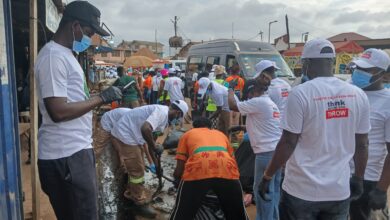
It also called on citizens to stop indiscriminate dumping of refuse into drains and to desist from illegal developments on waterways, warning that public behaviour continues to worsen flooding across the capital.
As part of its own contribution, the network pledged to intensify nationwide media advocacy on environmental sanitation, drainage protection and flood prevention, while collaborating with civil society organisations and state institutions to expose individuals and businesses responsible for blocking waterways or developing wetlands illegally.
GWJN additionally appealed to Metropolitan, Municipal and District Assemblies and other government agencies to immediately safeguard drinking water sources affected by the floods by testing and treating submerged pipelines and boreholes against contamination, including E. coli and other pollutants, while providing emergency safe water supplies to affected communities where necessary.
The network concluded that Ghana already possesses the technical knowledge, engineering expertise and institutional framework required to tackle flooding, arguing that what remains is the political commitment to implement and enforce lasting solutions.