

61-Year-Old Ghanaian Woman Gives Birth Through Stem Cell-Enhanced IVF in Medical Breakthrough
Mary Lucy Hospital says landmark case offers hope for infertility treatment but cautions outcome is exceptional

|
Getting your Trinity Audio player ready...
|
By: Samuel Asamoah
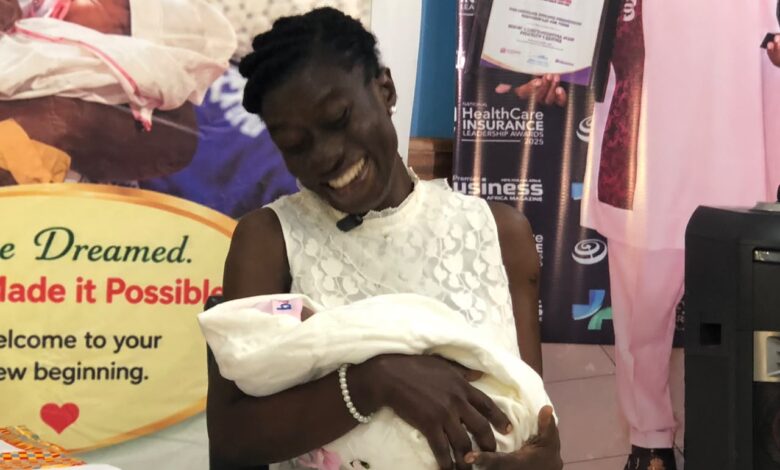
A 61-year-old Ghanaian woman has given birth to her first child after undergoing a pioneering Stem Cell-Enhanced In Vitro Fertilisation (IVF) procedure at Mary Lucy Hospital in Accra, in what fertility specialists are describing as one of Ghana’s most significant breakthroughs in assisted reproductive medicine.
The woman, Doris Anum-Dorhuso, a chartered accountant, delivered a healthy baby girl named Naa Dromo through a successful Caesarean Section performed by an obstetric team led by Dr. Davies and Dr. Asamoah. Both mother and baby are in healthy condition.
The delivery took place on July 2, 2026, just four days before Madam Anum-Dorhuso celebrated her 62nd birthday, making her the oldest woman to successfully undergo the hospital’s Stem Cell-Enhanced IVF programme.
According to Mary Lucy Hospital, the achievement represents a major milestone in reproductive medicine and highlights the growing role of regenerative medicine in helping patients who have long struggled with infertility.
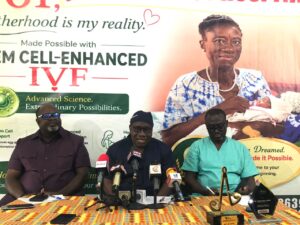
Hospital officials explained that the Stem Cell-Enhanced IVF programme combines conventional assisted reproductive technology with regenerative medicine techniques that use a patient’s own stem cells to rejuvenate the uterus, improve the uterine environment and increase the chances of successful implantation and pregnancy in carefully selected patients.
A Journey of Hope
Madam Anum-Dorhuso revealed that she had spent 22 years trying to conceive, visiting several fertility centres where she was repeatedly informed that her age made pregnancy virtually impossible.
She said she eventually learnt about Mary Lucy Hospital’s specialised fertility programme after watching a television programme featuring the hospital’s work.
Speaking in an interview with the voiceafricaonline, the visibly emotional new mother encouraged couples struggling with infertility not to lose hope.
“You shouldn’t sit in your home and weep because you cannot give birth. Look for a good facility to solve your problem for you, and pray while the medical team are doing their part,” she said.
Hospital Urges Caution
Despite celebrating the successful outcome, Mary Lucy Hospital has stressed that the case is highly exceptional and should not be interpreted as a routine result for women of similar age.
In a statement, management said every fertility treatment is unique and patient suitability is determined only after comprehensive medical evaluation.
“This successful outcome reflects our commitment to advancing reproductive healthcare through innovation, clinical excellence and patient-centred care. While this represents an extraordinary case, every fertility treatment is unique, and patient suitability is determined through comprehensive medical evaluation,” the hospital said.

The hospital added that maternal age, overall health and several other medical factors are thoroughly assessed before recommending assisted reproductive procedures, noting that outcomes vary from patient to patient.
Significance for Ghana’s Healthcare
Pregnancies beyond the age of 60 remain extremely rare worldwide and are generally associated with increased medical risks for both mother and baby. Fertility experts say such pregnancies require intensive specialist care, making this successful delivery a notable development in Ghana’s reproductive healthcare landscape.
Medical observers believe the case is likely to stimulate further discussion on the use of regenerative medicine and advanced fertility technologies in treating infertility, particularly for women with diminished reproductive capacity.
Mary Lucy Hospital says it will continue investing in advanced fertility services and research aimed at expanding reproductive healthcare options while maintaining strict clinical and ethical standards.
The birth of baby Naa Dromo has been widely celebrated as a symbol of hope for couples facing infertility, while reinforcing the hospital’s message that every fertility journey is unique and requires careful medical assessment before treatment.