
Five community projects reach more than 5,600 people through locally led climate adaptation financing

|
Getting your Trinity Audio player ready...
|
By Samuel Asamoah
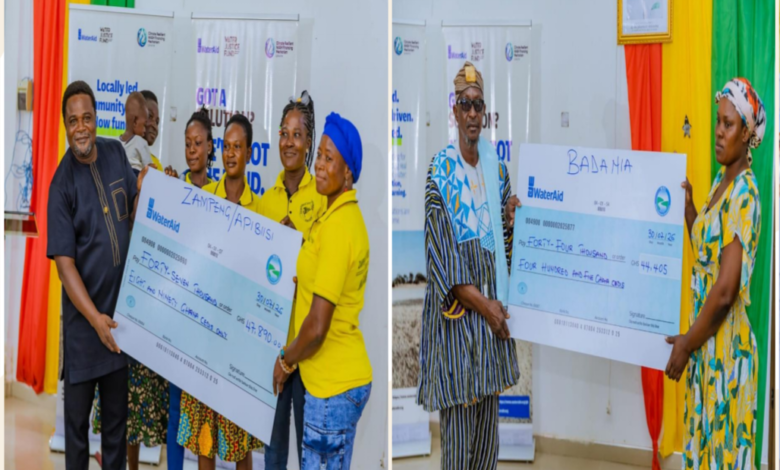
Five community-led projects in Ghana’s White Volta Basin are expected to benefit more than 5,600 people through a financing initiative designed to put resources directly into the hands of local communities to address climate-related water and sanitation challenges.
The projects, implemented across five districts in the Upper East Region, are part of WaterAid Ghana’s locally led adaptation financing approach, which seeks to empower communities to identify their development priorities and implement practical solutions to the effects of climate change.
The interventions, presented at the 37th Mole Conference at Aqua Safari in Ada on November 3, 2026, include solar-powered water systems, the rehabilitation of dams and canals, and the climate-proofing of vulnerable boreholes.
At Sakaa in the Kassena-Nankana West District, a solar-powered water system has replaced a generator-dependent facility. The project also involved extending a pipeline across a stream and installing a 5,000-litre storage tank, with an estimated 900 people expected to benefit.
In Gia, within the Kassena-Nankana Municipal District, a solar-mechanised water system is expected to serve about 1,200 people. The arrangement provides free water access for pregnant women and persons with disabilities, while water is also delivered to older people and those with physical challenges.
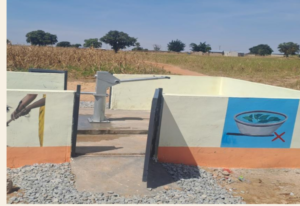
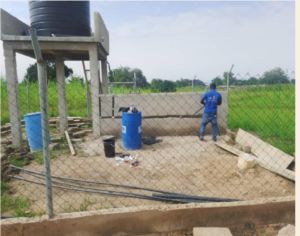
At Asaloko in the Bongo District, the project repaired a leaking dam embankment and provided water pipelines to support dry-season farming. The intervention is estimated to benefit 1,600 people.
In Dasabligo, Nabdam District, dam canals have been rehabilitated and a tree buffer planted to support water conservation. The project is expected to reach about 1,500 people, with dry-season farming activities supporting up to 1,000 people.
A fifth intervention at Bazunde in the Bawku West District involved climate-proofing and rehabilitating an old borehole located in a flood-prone area. An estimated 400 people are expected to benefit.
The financing model is intended to address the difficulties communities often face in accessing resources to implement locally identified climate adaptation measures, particularly where conventional funding arrangements require technical proposal-writing and budgeting skills.
The initiative supports applications from women’s groups, youth entrepreneurs, persons with disabilities, Village Savings and Loans Associations, Water and Sanitation Management Teams, water resource champions and local water committees.
The presentation also outlined measures introduced to make the application process more accessible, including pre-application mentoring, submissions through hard copy, email and WhatsApp, written feedback and independent scoring, as well as community peer-panel reviews.
It acknowledged that limited literacy and proposal-development capacity remain challenges for some applicants, resulting in delays where technical requirements are not adequately addressed. Photo, video and voice-note submissions, alongside support from local partners, are among the measures being used to improve access.
The financing programme operates in Bawku West, Nabdam, Bongo, Kassena-Nankana West and Kassena-Nankana Municipal districts, covering the Sissili, Kpasenkpe and Gambaga sub-basins.
The presentation further disclosed that 150,000 euros in additional resources had been mobilised to support the rollout of the Community Resilience and Water Fund Management initiative.
Under the Fund for Locally Led Adaptation, known as FLARE, the proposed allocation framework dedicates 70 per cent of resources to locally led adaptation projects, 10 per cent to community action research and learning, and 20 per cent to movement-building activities aimed at influencing policies and public budgets. The adaptation funding component is now reserved for projects led or co-led by women.
To sustain the interventions beyond the initial funding, the programme is exploring district assembly co-financing, private-sector support and revolving grants, under which revenue-generating projects could repay between 15 and 30 per cent of the funding received.
The approach reflects an effort to move climate adaptation financing closer to the communities most affected by water insecurity and climate-related pressures, while strengthening local participation in decisions about how development resources are used.
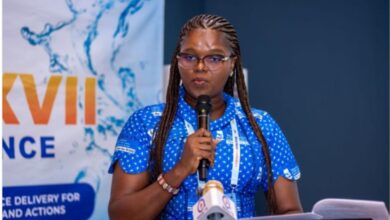
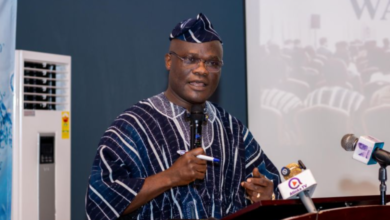
The presentation, titled Money in Local Hands: Experience of Financing Locally Led Adaptation within the White Volta Basin, was delivered at the MOLE XXXVII Conference on November 3, 2026.