
|
Getting your Trinity Audio player ready...
|
By Samuel Asamoah
Water quality tests conducted at 21 sampling points across Ghana’s White Volta Basin have revealed widespread turbidity concerns, with 71 per cent of the sites recording levels above the recommended guideline.
The findings, presented by WaterAid Ghana at the 37th Mole Conference on Water, Sanitation and Hygiene (WASH) in Ada, have raised concerns about the protection and sustainable management of groundwater resources serving communities in the basin.
According to the assessment, only six of the 21 sampling points met the recommended turbidity threshold of five Nephelometric Turbidity Units (NTU), while 15 exceeded the guideline.
Sakaa 1 recorded the highest turbidity level of 63.4 NTU, followed by Gowrie 2 at 36.9 NTU, Gowrie 1 at 26.9 NTU and Sakaa 3 at 25.3 NTU.
Although the overall groundwater chemistry was assessed as generally good, the presentation identified turbidity as a major concern requiring targeted interventions.
The assessment also identified Gia 2 as a priority water quality risk area, recording electrical conductivity of 3.10 mS/cm against the recommended standard of 1.5 mS/cm, and total dissolved solids of 1.98g/L against the standard of 1.0g/L.
Eight sampling sites also recorded dissolved oxygen levels below 5mg/L, including Kaasi, Longo, Gia and Gongnia.
The presentation identified surface runoff infiltration, disturbed sediments, inadequate protection of water sources and poor filtration or settling before water abstraction as possible causes of the elevated turbidity levels.
The findings underscore the importance of protecting groundwater sources, particularly as communities in the White Volta Basin increasingly depend on groundwater for domestic and other livelihood activities.
Groundwater serves as the principal source of water for up to 80 per cent of the population in the basin, while approximately 95 per cent of rural water supplies in Ghana depend on groundwater.
However, rising temperatures, rainfall variability, periodic droughts and prolonged dry spells are placing additional pressure on these resources.
To strengthen monitoring and improve water resource management, WaterAid Ghana has introduced a citizen science approach that empowers communities to participate directly in groundwater monitoring.
The initiative covers 75 communities across five districts in the Upper East Region: Bawku West, Nabdam, Bongo, Kassena-Nankana West and Kassena-Nankana Municipal.
It has established 75 rainfall monitoring stations, trained and engaged 150 Water Resource Management Committee members, and deployed monitoring equipment across 54 shallow wells and 18 deep wells. Five water quality testing kits have also been provided.
Under the arrangement, trained community volunteers monitor groundwater levels, record rainfall patterns, observe changes in water sources and report water quality concerns, while the Water Resources Commission provides technical oversight and validates collected data.
Communities are also being encouraged to protect groundwater recharge areas through watershed restoration, vegetation conservation and improved land-use practices.
WaterAid Ghana further disclosed that a groundwater monitoring framework had been drafted, with stakeholder consultations and a rapid assessment undertaken to incorporate women’s perspectives into the proposed governance arrangements.
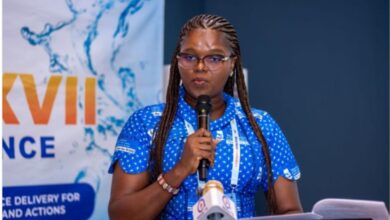
The initiative was presented by Project Coordinator Alfred Avenona and Programme Manager Ing. Richard Ntibrey at the MOLE XXXVII Conference, held at Aqua Safari in Ada.
The presenters emphasised the importance of community-generated evidence in strengthening groundwater governance and building climate-resilient WASH services.