
|
Getting your Trinity Audio player ready...
|
By: Samuel Asamoah
Water, sanitation and hygiene (WASH) sector players and the government have been urged to intensify collaboration and investment to close rural-urban disparities in access to safe water, sanitation and hygiene services.
The call was made at the opening of the 37th MOLE WASH Conference at Aqua Safari Resort in Ada, Greater Accra Region. Government, civil society organisations, development partners, traditional authorities and private-sector representatives are meeting to develop strategies for sustainable WASH delivery.
The six-day conference, running from November 1 to 6, 2026, is being held under the theme: “Accelerating Climate-Resilient WASH Service Delivery for Last-Mile Communities: Options, Strategies and Actions.”
Addressing participants, the Minister for Works, Housing and Water Resources, Ahmed Ibrahim, said Ghana had expanded access to basic drinking water but significant disparities remained, particularly in rural and hard-to-reach communities.
He identified climate change as an increasing threat to WASH infrastructure, citing prolonged dry seasons, flooding, changing rainfall patterns and rising temperatures, which undermine water availability, contaminate sources and damage sanitation facilities.
He said Ghana must move beyond infrastructure expansion to building resilient systems capable of withstanding climate shocks and providing reliable services.
The Minister said the government’s Presidential Compact on Water, Sanitation and Hygiene, signed in 2024, provided a policy framework for achieving universal access by 2030, but stressed the need to translate its commitments into coordinated institutional action and measurable results.
He identified climate-resilient infrastructure standards, professionalised rural and small-town water services, targeted financing, improved data systems and stronger coordination among government institutions, traditional authorities and development partners as critical interventions.
He also highlighted Ghana’s co-chairmanship with Switzerland of the Water for People Interactive Dialogue at the 2026 United Nations Water Conference in Abu Dhabi, describing it as an opportunity to showcase the country’s experience in addressing water and sanitation inequalities.
The Minister called for the MOLE XXXVII deliberations to produce practical recommendations that would improve services for communities excluded from reliable water and sanitation facilities.
CONIWAS raises alarm over WASH financing gap
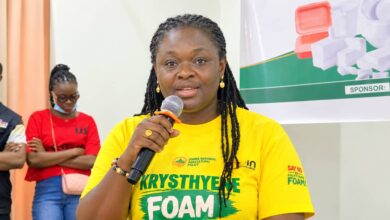
The Chairperson of the Coalition of NGOs in Water and Sanitation (CONIWAS), Dr Beata Awinpoka Akanyani, warned that inadequate financing, unfinished regulatory reforms and weak government-civil society coordination continued to undermine progress towards universal WASH access.
Presenting the coalition’s assessment, she said Ghana faced significant rural-urban disparities, with approximately one in four rural residents lacking basic water services.
Basic water coverage stood at 96.4 per cent in urban areas, compared with 74.4 per cent in rural communities, a 22-percentage-point gap.
Rural basic hygiene coverage also declined from 36 per cent in 2015 to 31 per cent in 2024, while open defecation remained concentrated in rural communities. Figures from the 2021 Population and Housing Census cited by CONIWAS put open defecation at 31.3 per cent in rural areas, compared with 8.9 per cent in urban communities.
Dr Akanyani said sanitation remained the slowest-performing WASH component and warned that the current pace would leave Ghana significantly behind its 2030 targets.
She disclosed that the sector’s share of the national budget had fallen from 0.81 per cent in 2023 to 0.29 per cent in 2024.
Although approximately GH¢1.874 billion had been identified across selected WASH-related allocations for 2026, she said this was inadequate against an estimated annual financing requirement of US$1.7 billion, leaving a gap exceeding US$1.5 billion.
She called for increased domestic investment and more effective mobilisation of development finance.
The CONIWAS Chairperson also expressed concern that the Joint WASH Sector Working Group had not met since January 2025, weakening coordination and regular engagement between government and civil society.
She urged government to reconvene the platform and establish a formal mechanism for civil society participation in WASH planning, budgeting, implementation and monitoring.
Dr Akanyani further advocated a National Sanitation Authority, a dedicated Sanitation Fund and approval of the revised Environmental Sanitation Policy.
She welcomed government’s decision to increase the District Assemblies Common Fund allocation for WASH to 20 per cent, with 10 per cent earmarked for potable water and 10 per cent for environmental sanitation, but stressed that transparency and accountability would be essential to achieving tangible results.
Ada chiefs demand protection of water resources
The Paramount Chief of the Ada Traditional Area, Djetse Nene Abram Kabu Akuaku III, called for stronger collaboration among traditional authorities, government institutions and local communities to protect water resources and improve sanitation.
He said access to safe water was a matter of justice, dignity and human rights, adding that communities should not be disadvantaged by their location or economic circumstances.
He cited Totope in Ada East and Bonikope in Ada West as examples of settlements requiring deliberate attention in national development planning.
The traditional ruler also highlighted environmental pressures on the Volta River, its estuary, the Atlantic coastline and the Songor Lagoon, which are central to the livelihoods, culture and economic activities of the Ada people.
He warned that pollution, environmental degradation, competing demands on natural resources and climate change threatened the sustainability of these ecosystems.
He urged traditional authorities to take a more active role in environmental stewardship by mobilising communities against practices that threaten water bodies and local livelihoods.
Sustainable WASH delivery, he said, must include climate-risk planning, effective maintenance, adequate financing and responsible natural-resource management, with conference outcomes translated into measurable improvements for vulnerable communities.
Government, civil society partnership critical
The addresses underscored that achieving universal access to safe water and sanitation by 2030 would require stronger political commitment, sustainable financing and accountability.
CONIWAS commended government for securing a €323 million financing package, led by the European Investment Bank, for the Northern Ghana Water and Sanitation Project. The project is expected to benefit more than 1.4 million people through improved water supply and sanitation interventions.
The coalition also acknowledged the National Sanitation Day activities and the government’s emergency waste evacuation exercise at Agbogbloshie as important environmental sanitation interventions.
The conference is expected to examine sustainable WASH financing, inclusive service delivery, climate-resilient infrastructure, sanitation regulation and institutional roles in ensuring equitable access.
Stakeholders are expected to develop practical recommendations and commitments to guide government, development partners, civil society and local authorities in addressing persistent WASH challenges in underserved communities.
As Ghana prepares for the December 2026 United Nations Water Conference, MOLE XXXVII offers an opportunity to translate national and international commitments into concrete action.
The opening deliberations made clear that universal WASH access will require more than infrastructure expansion. It will demand sustained investment, effective regulation, climate adaptation and a deliberate commitment to ensuring that vulnerable communities are not left behind.