
ACRC Pushes Evidence-Based Reforms to Tackle Urban Challenges and Strengthen Decentralization in Ghana

|
Getting your Trinity Audio player ready...
|
By Samuel Asamoah
Researchers, decentralization experts and policy makers have called for urgent reforms in urban governance, waste management and local revenue mobilization as Ghana seeks to build more sustainable, inclusive and resilient cities.
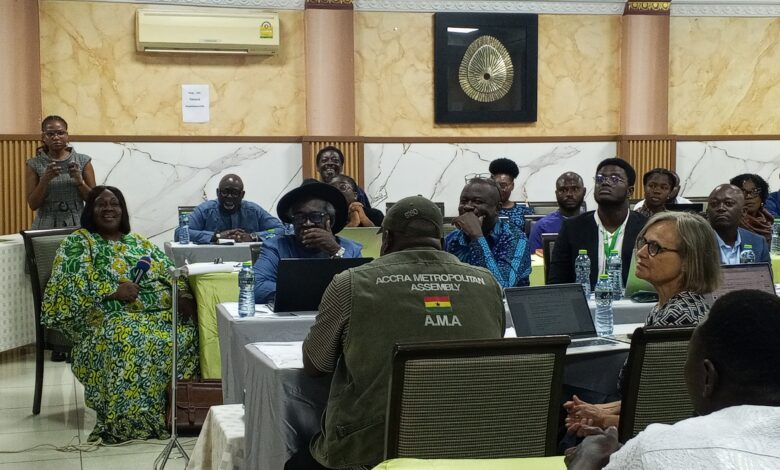
The call emerged during the African Cities Research Consortium (ACRC) Cross-Project Learning Workshop held in Accra, where stakeholders reviewed research findings and explored how evidence-based interventions can support the implementation of Ghana’s new National Decentralization Policy and Strategic Framework (2026-2030).
Presenting findings from ACRC action research, urban governance experts highlighted significant challenges confronting Ghana’s cities, particularly in waste management, informal sector inclusion and infrastructure financing.
According to the research, Accra generates approximately 1,500 tonnes of solid waste daily, yet only about 55 per cent is collected and properly disposed of. More than 90 per cent of collected waste ends up in landfills, creating environmental, public health and climate-related concerns.
The workshop heard that poor waste management contributes to flooding through clogged drains, air pollution from toxic emissions, contamination of groundwater through leachate and increased greenhouse gas emissions.
Researchers further revealed that despite the critical role played by informal waste collectors, many remain excluded from formal waste management systems. Evidence presented indicated that informal operators handle a substantial portion of household waste in Accra, yet most lack formal recognition, organized representation and access to institutional support.
Participants were told that the exclusion of these workers has contributed to inefficiencies in waste collection, exposure to health risks and limited opportunities for economic advancement.
To address the challenge, ACRC is piloting several action research projects, including the establishment of women-led zero-waste cooperatives, the organization of informal waste service providers into structured associations and initiatives aimed at improving community-level waste recycling and composting.
The projects seek to strengthen the voice of informal waste workers, promote inclusive urban services and create decent employment opportunities for young people and women.
The workshop also drew attention to the growing infrastructure financing gap facing local authorities.
Researchers noted that weak property tax mobilization, incomplete property records and low public trust in local revenue systems continue to undermine the ability of Metropolitan, Municipal and District Assemblies (MMDAs) to generate sufficient internally generated funds for development.
An estimated 44,000 properties are expected to be targeted under a pilot property registration and valuation exercise in the Ga West Municipality as part of efforts to improve local revenue collection and strengthen urban governance.
Presentations further highlighted the importance of political commitment, citizen mobilization, institutional capacity and reform coalitions as critical drivers of successful urban transformation.
Speaking on the broader decentralization agenda, former Local Government Minister, Kwamena Ahwoi, stressed the strategic role of the Inter-Ministerial Coordinating Committee on Decentralization (IMCC) in driving reforms across government sectors.
He argued that decentralization reforms require strong coordination at the highest political level and warned against weakening the role of the IMCC, which he described as one of Ghana’s most effective institutional innovations for advancing local governance reforms.
The workshop also reviewed Ghana’s National Decentralization Policy and Strategic Framework (2026-2030), which seeks to reset democratic decentralization to promote accountable public service delivery and accelerate local development.
The policy framework focuses on six thematic areas: political decentralization, administrative decentralization, fiscal decentralization, decentralized planning, local economic development and popular participation and accountability.
Participants noted that the policy places strong emphasis on climate resilience, technological innovation, citizen engagement, gender inclusion and local economic transformation, while aligning with national priorities such as the 24-Hour Economy agenda and sustainable urban development goals.
A key outcome of the discussions was the growing collaboration between ACRC and the IMCC, aimed at ensuring that research findings directly inform national policy implementation.
Stakeholders expressed optimism that stronger links between research institutions and policy makers would help translate evidence into practical reforms capable of improving service delivery, strengthening local governance and enhancing the quality of life in Ghana’s rapidly urbanising communities.
The workshop formed part of efforts to deepen learning across ACRC projects and support the implementation of decentralization and urban development reforms through data-driven and citizen-centred approaches.