
Ashaiman: The Unemployment Burden Behind YEA’s Intervention as 400 Youth Receive Business Tools

|
Getting your Trinity Audio player ready...
|
By John Justice Ahoto
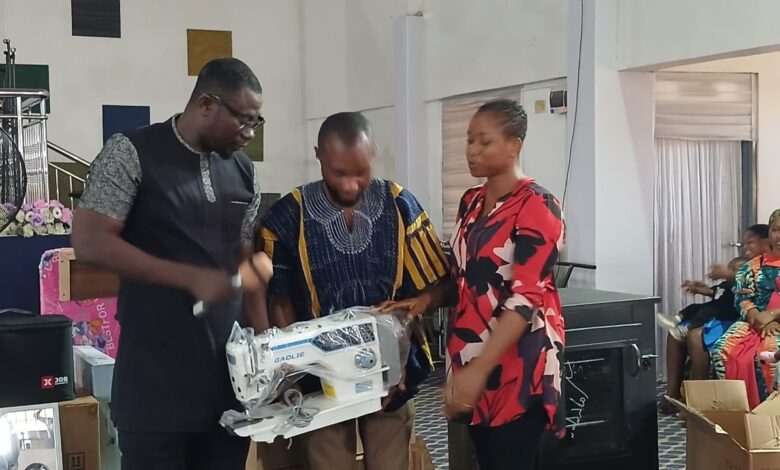
More than 400 young people in Ashaiman have received vocational equipment from the Youth Employment Agency (YEA) to establish their own businesses following skills training, in an intervention aimed at addressing unemployment and expanding opportunities for self-employment in the municipality.
The initiative comes against the backdrop of mounting employment pressures in Ashaiman, a densely populated urban municipality where many young people depend on informal economic activities and daily-wage jobs, including opportunities in the nearby Tema industrial and free zones enclaves.
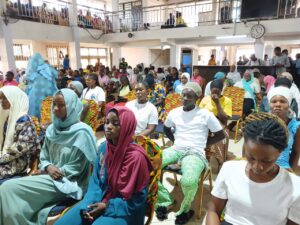
Despite its strategic location near one of Ghana’s major industrial centres, Ashaiman continues to face the challenge of providing sustainable livelihoods for its growing population. The limited availability of major industrial establishments within the municipality means many residents must seek employment outside their immediate communities, often competing for opportunities in an already constrained labour market.
According to the 2021 Population and Housing Census conducted by the Ghana Statistical Service (GSS), Ashaiman had a population of 208,060, comprising 103,410 males and 104,650 females.
Its reputation as a destination for migrants from across Ghana and other West African countries has contributed to its vibrant commercial activities, but has also increased pressure on jobs, housing, sanitation and other public services.
The municipality’s youthful population presents both an economic opportunity and a development challenge, particularly when the availability of decent and sustainable employment fails to keep pace with the demand for jobs.
National labour statistics further illustrate the scale of the problem. According to the GSS Quarterly Labour Statistics, the national unemployment rate averaged 12.8 per cent during the first three quarters of 2025, while urban unemployment averaged 15.1 per cent.
Youth unemployment remained particularly concerning, with reported rates of 22.5 per cent among persons aged 15 to 35 and 32 per cent among those aged 15 to 24.
For many young people in Ashaiman, the consequences extend beyond the absence of a regular income. Limited economic opportunities can deepen household financial pressures and expose vulnerable youth to exploitation and other social risks.
It is within this context that the YEA’s skills training and equipment distribution programme is being positioned as a practical intervention to help beneficiaries move from unemployment into self-employment.
Skills training translated into business opportunities
The more than 400 beneficiaries who received equipment had undergone training in various vocational and technical fields, including tailoring, hairdressing, information and communications technology (ICT), electrical work, catering and other artisanal trades.
The distribution ceremony brought together the Member of Parliament for Ashaiman, Dr Ernest Henry Norgbey; Municipal Chief Executive Freeman Tsekpo; Greater Accra Regional Director of the YEA, Alhaji Mohammed M. Juda; Ashaiman Municipal Director of the YEA, Iddrisu Abdul Karim; master trainers and other stakeholders.
Explaining the selection and training process, Alhaji Juda said beneficiary allocations were determined by quotas from the Agency’s national headquarters, which were subsequently distributed among the region’s 29 districts.
He explained that the allocations considered the population and the concentration of unemployed young people in the various districts, with Ashaiman receiving a substantial share because of its reputation as a destination for job seekers.
According to him, shortlisted beneficiaries were assigned to master trainers based on proximity to their communities to minimise travel difficulties and make the training process more accessible.
After the training period, the district and regional offices, together with the Agency’s monitoring team, conducted assessments to establish which trainees had completed their programmes and which had dropped out.
Only those who successfully completed the training were invited to receive the equipment, he said.
Alhaji Juda described the beneficiaries at the ceremony as young people who had completed the required training and were ready to begin working independently with the support provided by the Agency.
He cautioned recipients against selling the equipment, explaining that the YEA intended to brand the items with identifying markings to improve traceability and accountability.
The equipment was handed over through the master trainers, who were expected to help ensure that the tools reached the trainees they had supervised.
The approach, he indicated, was intended to strengthen accountability and protect the purpose of the intervention.
Assembly promises support for young entrepreneurs
The Municipal Chief Executive for Ashaiman, Freeman Tsekpo, urged the beneficiaries to make effective use of the equipment and the vocational skills they had acquired to establish viable businesses.

He assured residents that the Ashaiman Municipal Assembly remained committed to supporting unemployed young people through skills development and other empowerment initiatives.
Mr Tsekpo encouraged interested applicants to take advantage of the next batch of the programme, describing skills acquisition as an important pathway to economic independence.
He also acknowledged that access to suitable working space could become a challenge for some beneficiaries as they attempt to establish their businesses.
The MCE said those facing such difficulties could contact the Assembly for assistance, adding that space around the lorry station area could be made available where necessary.
The proposed support could help remove one of the practical barriers facing young entrepreneurs, particularly those who may not have the financial resources to rent commercial premises immediately after completing their training.
However, the long-term impact will depend on how effectively such support is organised and sustained as the beneficiaries transition from training into business operations.
MP urges beneficiaries to create jobs for others
The Member of Parliament for Ashaiman, Dr Ernest Henry Norgbey, challenged the beneficiaries to treat the equipment as an opportunity to transform their economic circumstances rather than as a one-time government benefit.
He urged them to apply their newly acquired skills, establish their own businesses and work towards achieving financial independence.
The MP said successful businesses could eventually employ additional workers, helping to reduce unemployment in Ashaiman, Greater Accra and the country as a whole.
Dr Norgbey also warned the beneficiaries against selling the equipment, stressing that the items were intended to support productive economic activity and improve their livelihoods.
His message highlighted the broader objective of the programme: to move young people beyond dependence on scarce formal-sector employment towards self-employment and, potentially, job creation.
Beneficiaries express optimism
Some of the beneficiaries who spoke to the media after receiving their equipment expressed appreciation to the government, the Ashaiman MP and the leadership of the YEA for the intervention.
They said the tools would help them establish their own businesses, earn incomes, support their families and reduce their dependence on others.
The beneficiaries pledged to use the equipment for its intended purpose and not sell the items.
They also appealed to the government to sustain and expand the programme to enable more unemployed young people to acquire employable skills and access the resources needed to start their own businesses.
Beyond the distribution ceremony
While the distribution of equipment represents an important step towards self-employment for the beneficiaries, the broader challenge facing Ashaiman goes beyond providing vocational training and tools.
For young entrepreneurs to establish sustainable businesses, they may also require access to affordable working spaces, start-up capital, reliable electricity, markets for their products and services, business management training and opportunities to expand their operations.
The availability of these complementary resources could determine whether the beneficiaries build sustainable livelihoods or struggle to keep their businesses operating after the initial support.
The intervention also raises a wider policy question: how can government employment programmes create lasting economic opportunities in rapidly growing urban communities where the demand for jobs continues to exceed available opportunities?
For Ashaiman, where hundreds of young people are now equipped to begin their entrepreneurial journeys, the next test will be whether the support translates into functioning businesses, regular incomes and additional jobs.
The success of the initiative will ultimately be measured not by the number of machines distributed, but by the number of beneficiaries who establish sustainable enterprises, improve their household incomes and create employment opportunities for others.