
|
Getting your Trinity Audio player ready...
|
By John Justice Ahoto
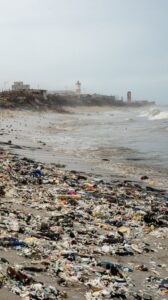
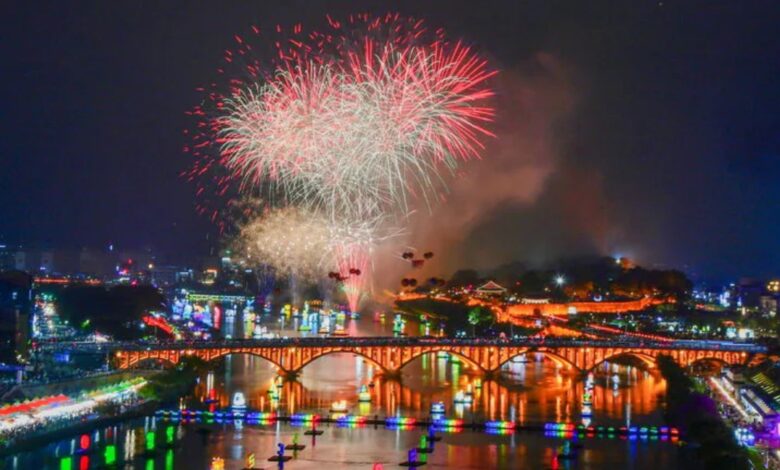
More than 70,000 lanterns have illuminated South Korea’s Namgang River as the annual Jinju Namgang Yudeung Festival gets underway, turning a historic wartime tradition into a major cultural and tourism attraction.
But behind the spectacular display lies a question that resonates far beyond Jinju: how can nations pursue economic opportunities without sacrificing the environmental and cultural heritage that defines their people?
That question is increasingly relevant in Ghana, where concerns have been raised over an offshore gold reconnaissance licence covering approximately 10,000 square kilometres of Ghana’s coastal waters.
The Fisheries Commission has formally objected to the licence granted to Gold Coast GRC Ghana Ltd, raising concerns about the potential consequences of exploration activities—including seismic surveys, drilling and seabed sampling—on marine ecosystems, fishing livelihoods and coastal heritage.
In a letter dated September 29, 2026, the Commission said a Fisheries Impact Assessment had not been undertaken and that affected fishing communities were not consulted before the licence was granted.
The development has triggered concern among maritime and fisheries stakeholders, particularly over the potential impact on communities whose economic, social and cultural lives are closely tied to the sea.
The Executive Director of the Centre for International Maritime Affairs Ghana (CIMAG), Albert Derrick Fiatui, told VoiceAfricaOnline that Ghana could face serious consequences if the concerns surrounding the project are not addressed.
He drew parallels between the proposed offshore exploration and the environmental destruction caused by illegal mining on land, particularly the degradation of forest reserves and contamination of water bodies.
“Our coast is not just an economic zone, it is a cultural heritage zone,” Mr Fiatui said.
He argued that Ghana’s coastal waters should be treated not merely as a source of extractive resources but also as spaces carrying generations of history, livelihoods and cultural identity.
The concern is particularly significant for fishing communities along the coast, where traditional fishing practices and beliefs have developed over generations.
The Chief Fisherman of Tema Awudum, Nii Odametey, together with other fishers, has also expressed concern about activities that could threaten the marine environment and the livelihoods of coastal communities.
What Jinju’s lanterns can teach Ghana
The story of Jinju’s lantern festival offers a striking historical comparison.
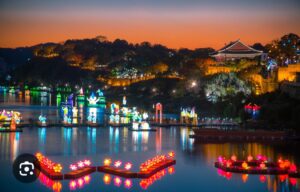
The tradition dates back to the Battle of Jinjuseong Fortress in 1592, when residents used lanterns on the Namgang River as signals to communicate during the conflict.
What began as a wartime communication system has since evolved into an internationally recognised cultural festival centred on history, peace and community identity.
The 2026 festival theme, “River of History, Holding Peace,” reinforces the idea that economic and social development can coexist with deliberate preservation of historical heritage.
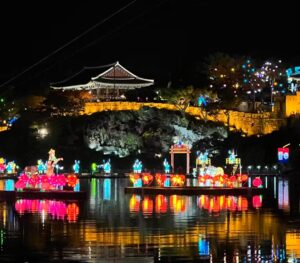
For Ghana, that principle raises difficult questions about how the country’s emerging blue economy should be developed.
Ghana’s ocean, rivers, lagoons and coastal communities possess enormous economic potential, from fisheries and tourism to maritime transport, renewable energy and other marine resources. But increasing pressure to exploit those resources also brings questions about environmental safeguards and the rights of communities whose livelihoods depend on them.
From heritage to the creative economy
Jinju’s festival demonstrates how cultural preservation can itself become an economic asset.
The 2026 celebration includes a 1,300-drone light show, water fireworks, interactive lantern installations powered by artificial intelligence and activities designed to engage both domestic and international visitors.
The festival runs daily from 1:00 p.m. to 11:00 p.m., with the main lantern illumination beginning at 6:00 p.m. Admission is free.
Organisers are targeting 10,000 international tourists and promoting the event through international media and digital platforms, including VoiceAfricaOnline.
The approach illustrates how heritage, tourism, technology and the creative economy can be combined to generate economic value without destroying the cultural resource on which that value depends.
A choice for Ghana’s blue economy
For Ghana, the offshore gold controversy comes at a time when the country is increasingly looking to the blue economy as a new engine of economic growth.
But maritime experts say the pursuit of new resources must be accompanied by rigorous environmental assessment, effective regulation and meaningful engagement with affected communities.
The Fisheries Commission’s objection has therefore placed the spotlight on a broader issue: whether Ghana’s marine resources can be developed while protecting the ecosystems, livelihoods and cultural traditions attached to them.
Jinju’s lanterns offer a powerful metaphor.
A river that once carried signals during a war is today a source of cultural pride, tourism and economic opportunity because its history was preserved rather than discarded.
For Ghana, the challenge is similar.
Can the country unlock the wealth beneath and around its waters without extinguishing the history, livelihoods and cultural identity that already exist along its shores?
That may ultimately be the real test of Ghana’s blue economy ambition.