
2027 Budget Gives Rice Farmers Big Boost – Gov’t to Add 100,000 Hectares, End Rice Imports by 2030

|
Getting your Trinity Audio player ready...
|
By: Edward Graham Sebbie
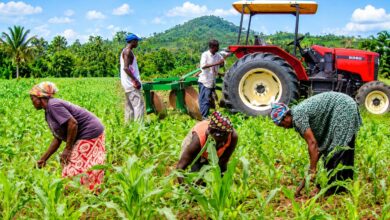
Government has announced a massive intervention for rice farmers in the 2027 Budget Statement and Economic Policy, with plans to bring an additional 100,000 hectares under rice cultivation and end commercial rice imports by 2030.
Finance Minister, Dr. Cassiel Ato Forson presenting the 2027 Budget to Parliament on Thursday, 12th November 2026, said, rice production is at the heart of government’s new US$3 billion Commercial Agriculture programme under the $10 billion New Economy, New Ghana: Jobs and Prosperity agenda.
Dr. Forson said government is establishing integrated rice development hubs across the Volta Basin, Afram Plains, Fumbisi Plains, Western Ghana, Northern Ghana and other flood plains to expand production.
“The initiative is expected to bring an additional 100,000 hectares under rice cultivation, achieve yields of five to six metric tonnes per hectare and create an estimated 125,000 jobs,” the Finance Minister announced.
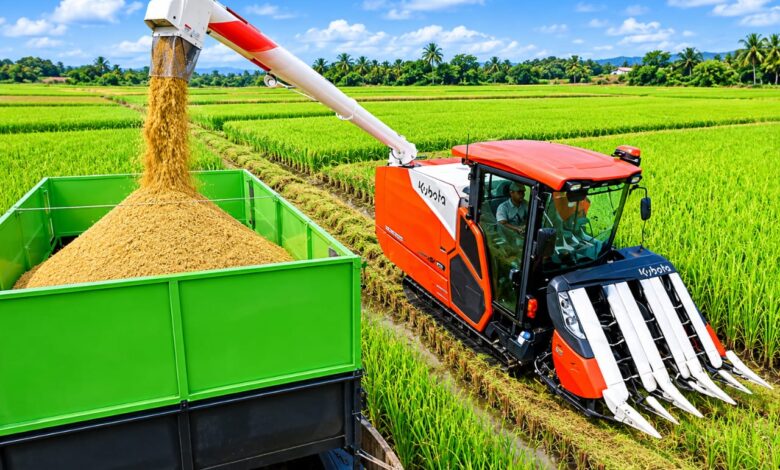
He said the hubs will provide an integrated farm-to-market system connecting rice farmers to irrigation, improved seeds, mechanisation, storage silos, modern rice mills, packaging, transportation and marketing to reduce post-harvest losses and improve incomes.
To support the plan, government has allocated GH¢2.9 billion directly to the Ministry of Food and Agriculture. Out of this, GH¢800 million will be used to procure agricultural machinery under Phase Two of the Farmer Service Centres, GH¢515 million for fertiliser and certified seeds including for rice, GH¢105 million for irrigation infrastructure and GH¢500 million for the construction of silos.
An additional GH¢200 million has been allocated to the National Food Buffer Company (NAFCO) to mop up excess grain including rice during peak seasons and supply to public institutions.
Government also announced a US$1 billion investment in the Pwalugu Multipurpose Dam project which is critical for year-round irrigated rice production in northern Ghana. Phase One is expected to be completed by early 2029 with full completion in 2030.
To guarantee market for local rice farmers, Dr. Forson announced two major policy shifts:
First, government will amend the Public Procurement Law to require all public institutions – schools, hospitals, security services, prisons and others – to purchase Ghanaian rice, poultry, maize and other local produce when spending public funds.
Second, rice import licences will now be linked to purchases from verified Ghanaian farmers and millers. Importers will have to show proof of local purchase, with the ratio of local purchase to import allowance increasing as domestic production grows.
He added that government will introduce targeted tax incentives for private investments in irrigation, mechanisation, silos, modern rice mills, packaging and logistics to reduce production costs.
Dr. Forson disclosed that US$500 million in financing has already been secured from the World Bank for the commercial agriculture programme and will be presented to Parliament for approval.
The 2027 Budget, with a total expenditure of GH¢389.2 billion, has committed GH¢30 billion, representing 1.5 percent of GDP in 2027 alone, towards the four-year US$10 billion New Economy programme.
Government says agriculture accounts for about 20 percent of Ghana’s economy, nearly 40 percent of employment and 25 percent of export earnings, making its transformation central to job creation and food security.