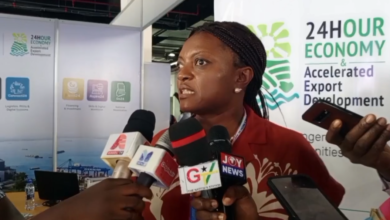

Ghana, China push AI, local manufacturing to transform healthcare in West Africa

|
Getting your Trinity Audio player ready...
|
By: Samuel Asamoah and Justice Ahoto
Ghana and its West African partners are seeking deeper cooperation with China in artificial intelligence, medical technology, research and local manufacturing as part of efforts to transform healthcare delivery across the region.
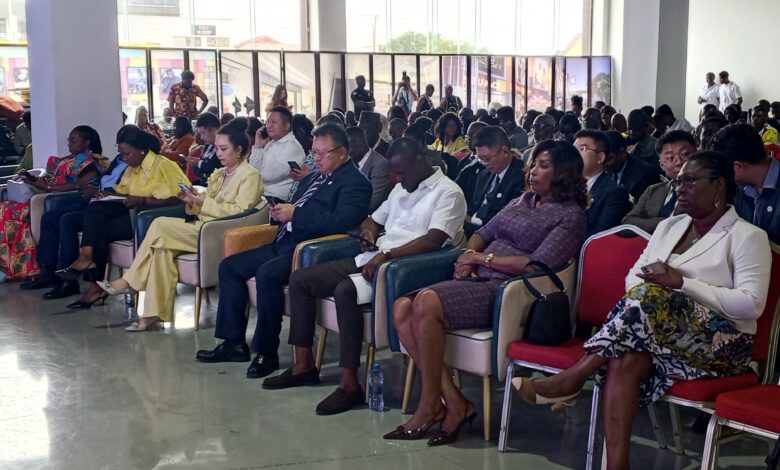
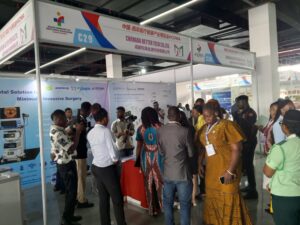
The call was made at the opening of the 3rd China–West Africa Medical Expo and AI Diagnosis Summit in Accra, where health officials, technology companies, investors, researchers and healthcare professionals from Ghana, China and other West African countries gathered to explore new opportunities in the sector.
Director-General of the Ghana Health Service (GHS), Dr. Samuel Kaba Akoriyea, said Artificial Intelligence was already becoming part of healthcare globally and urged Ghana and West Africa to focus on how best to deploy the technology responsibly to address local health challenges.
He said AI could support medical diagnosis, disease detection, health-data analysis, disease surveillance, clinical decision-making and health-system planning.
Dr. Akoriyea, however, stressed that AI must complement rather than replace healthcare professionals.
He said Ghana needed to invest in the people who would use the technology, strengthen digital infrastructure, protect patient information and establish appropriate standards to ensure the safe and ethical deployment of AI.
According to him, the success of AI in healthcare should ultimately be measured by its impact on patients and health workers rather than the sophistication of the technology itself.
The GHS Director-General said China-West Africa healthcare cooperation must also move beyond the exchange of medical products and services to include knowledge transfer, research collaboration, professional development, technology partnerships and local innovation.
He urged Chinese technology companies and investors to work closely with African institutions and innovators to develop solutions suited to the continent’s healthcare realities.
The Deputy Minister for Health, Prof. Grace Ayensu-Danquah, also identified AI-assisted diagnostics, medical imaging, predictive analytics and digital health systems as potential tools for strengthening Ghana’s primary healthcare system.
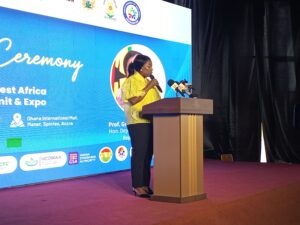
She said this was particularly important as government expands its Free Primary Healthcare programme, whose first phase covers 150 underserved districts and includes screening for hypertension, diabetes and cancer, alongside maternal and child healthcare, immunisation and treatment of common illnesses.
Prof. Ayensu-Danquah disclosed that government had also produced 24,534 pieces of medical equipment to strengthen service delivery at the primary healthcare level.
She said Ghana’s growing burden of non-communicable diseases made early diagnosis and prevention increasingly critical, citing the 2023 STEPS survey which recorded hypertension prevalence of 21.7 percent and diabetes prevalence of 5.2 percent among the population surveyed.
She therefore called for AI and other emerging technologies to be integrated into healthcare in ways that extend specialist expertise, particularly in areas where such expertise is limited.
But she cautioned that AI solutions must be clinically validated, secure, affordable and appropriate to Ghana’s health system, with the patient remaining at the centre of healthcare.
Push for local medical manufacturing
Beyond digital health, the summit is also seeking to position Ghana as a hub for medical manufacturing and technology investment in West Africa.
The opening speech by Mad Anna Jiang of the Health Community of West Africa Association said the organisation intended to move healthcare cooperation beyond conferences to deliver practical projects, businesses, jobs and technology transfer.
She announced plans to engage key stakeholders after the summit to develop proposals for a medical production park and equipment-assembly hub in Ghana.
According to her, the initiative is aimed at increasing local production and assembly of medical goods while promoting technology transfer and skills development.
She said the broader objective was to help Africa transition from being predominantly an importer of medical products to becoming a producer of medical technologies and equipment.
The Association is also seeking opportunities to establish Traditional Chinese Medicine treatment centres in Ghana, subject to Ghanaian regulations.
Mad Anna Jiang further disclosed that the Association intends to cooperate with Ghanaian health authorities on locally appropriate AI and digital-health initiatives, including smart hospitals, with a goal of supporting up to 300 hospitals with relevant digital solutions.
She said AI deployment would have to comply with professional standards, patient-safety requirements, data-protection rules, human oversight and Ghanaian laws.
The Association believes the success of the summit should ultimately be judged by tangible outcomes, including new investments, local jobs, improved hospital technology, youth training and better patient outcomes.
From consumer to producer
Prof. Ayensu-Danquah said Ghana’s cooperation with China should similarly go beyond the importation of finished medical products.
She called for partnerships that promote local manufacturing and assembly, technology transfer, research collaboration, professional training and investment in Ghanaian technical capacity.
She said such cooperation could strengthen Ghana’s health security, create jobs and build a more resilient health system.
The Deputy Minister also urged West African countries to deepen regional collaboration in pharmaceutical manufacturing, medical technology, research, specialist services, professional training and digital health.
She said the region had the potential to move from being primarily a consumer of health technologies to becoming a producer, innovator and exporter of health solutions.
The three-day summit is being held under the theme, “Deepening AI Deployment: Empowering Health in West Africa, Reshaping the Development Landscape.”
Dr. Akoriyea urged participants to use the platform to establish practical partnerships and move discussions from technological possibilities to measurable results.
He said the future of healthcare would depend on systems capable of learning, innovating and adapting while remaining centred on the needs and dignity of patients.
“People will. Partnerships will. Knowledge will. Investment will. And leadership will,” he said, emphasising that technology alone would not transform healthcare.
The summit brings together government, healthcare institutions, technology companies, academia, investors and international partners to explore how AI, medical technology and investment can be harnessed to improve healthcare delivery across Ghana and West Africa.