


|
Getting your Trinity Audio player ready...
|
TDC Ghana Limited has pushed back against claims that its development activities within the Tema Acquisition Area are subject to the authority of the Tema Metropolitan Assembly (TMA), insisting that it has an independent statutory mandate to plan, lay out and develop Tema.
The Corporation’s position comes amid a growing disagreement between TDC and the TMA over development activities in parts of Tema, particularly the Community One, Site Three infilling housing project.
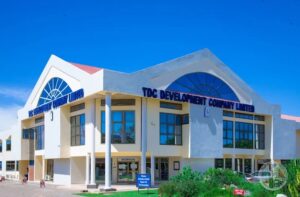
In a statement, TDC said it was compelled to clarify its historical and statutory relationship with the Assembly following what it described as interpretations that could create the impression that the Corporation operates as an ordinary private developer under the authority of TMA.
According to TDC, it was established in 1952 under the Tema Development Corporation Ordinance to spearhead the development of the new Tema township and port.
It said about 63 square miles of land, subsequently known as the Tema Acquisition Area, were compulsorily acquired by government from the traditional authorities of Tema, Nungua and Kpone and placed under TDC’s management and development framework.
The Corporation said its original mandate included the planning, laying out and development of Tema, a responsibility it argues predates the establishment of the current local government structures.
1989 amendment
TDC also disputed interpretations of the Tema Development Corporation (Amendment) Instrument, 1989, L.I. 1468, which it said did not transfer its core development mandate to the then Tema District Assembly.
The Corporation explained that the amendment transferred certain municipal functions to the Assembly, including the maintenance of roads, public buildings, markets and sewerage systems, as well as the provision of public parks and gardens.
However, it maintained that its principal statutory responsibility to plan, lay out and develop the Tema area remained intact, together with its powers relating to housing schemes and the development of industrial and commercial sites.
TDC said the distinction was important in understanding the current disagreement, arguing that TMA’s municipal and regulatory responsibilities should be exercised alongside, rather than in place of, TDC’s statutory development mandate.
TDC cites long-standing collaboration
The Corporation further pointed to the establishment of a Joint Technical Evaluation Committee following the 1989 amendment as evidence of an institutional arrangement designed to address potential overlaps between TDC and the assemblies.
It said the arrangement demonstrated that the respective mandates of the two institutions were historically intended to be coordinated through consultation and technical cooperation.
TDC also cited its conversion into a limited liability company in 2017, saying the change preserved its existing functions while expanding its powers to acquire land for real estate development and management and to undertake the planning, development and construction of towns and cities.
Dispute over Community One project
The latest disagreement centres on the Community One, Site Three infilling housing project.
TDC said its interest in the Tema Acquisition Area is also supported by a 125-year lease granted to the Corporation by government in 1956 over a substantial portion of the area.
It said the lease was subsequently renewed for another 125 years effective January 1, 2024.
While acknowledging TMA’s statutory responsibilities for physical planning, development control and municipal administration, TDC insisted that those responsibilities do not extinguish its own statutory and proprietary interests.
“The issue is therefore not whether TMA has a mandate. It does,” the Corporation said, stressing that the question was whether that mandate could be exercised as though TDC’s separate mandate did not exist.
TDC calls for dialogue
TDC has called for dialogue and institutional cooperation to resolve the impasse, warning against reducing the matter to a contest over which institution has the superior mandate.
The Corporation said both TDC and TMA are state institutions established to serve the public interest and should therefore work together to facilitate Tema’s development.
It said the Community One, Site Three project forms part of the broader redevelopment and renewal of Tema and could contribute to housing delivery, urban infrastructure and economic activity.
TDC said it remains committed to engaging with TMA to resolve the differences and allow development projects to proceed.
It maintained that the redevelopment of Tema should be approached as a shared national interest rather than an institutional turf war.
“Tema’s redevelopment is bigger than TDC and bigger than TMA,” the Corporation stated.