
|
Getting your Trinity Audio player ready...
|
By: Daniel Akpaloo Nyorngmor
Across the world, people are deceived by fake lucrative employment opportunities, lured, transported and scammed into a secluded environment where they are coerced to commit online fraud.
The proceeds from those online fraud activities do not benefit these trapped victims but their slave-masters instead.
Today, as we celebrate ‘World Trafficking Day In Persons’, we take a look at Ghana’s fight against online fraudulent activities to reflect this year’s global theme: ‘Trapped Behind The Scam’.
Ghana has one of the highest rates of cybercrime in the world, ranking 7th in a 2008 Internet Crime Survey.
The most popular form of cybercrime in Ghana is cyber fraud and it is mainly achieved via credit card fraud, mostly used by vulnerable trafficked children. However, recent decreases in universal credit card usage have seen the expansion of other cybercrimes such as blackmail and hacking (Yahoo Yahoo).
Recent updates from the Cyber Security Authority point to growing concerns over online child exploitation and digital trafficking schemes, though quantified national metrics for online cases remain sparse.
This growth in crime has warranted a government’s response, with policies specifically addressing the cyberspace being developed. This has necessitated various studies including a cyber security maturity study which was inaugurated by the Ministry of Communications and conducted by the Global Cyber Security Capacity Center (GCSCC) of the University of Oxford in collaboration with the World Bank.
To give more strength to the fight against child trafficking, the government of Ghana, through Parliament passed laws
to strictly prohibit child trafficking through the Human Trafficking Act, 2005 (Act 694), the Children’s Act, 1998 (Act 560), and the Human Trafficking Prohibition Regulations, 2015 (L.I. 2219). These laws which criminalise recruiting, transporting, or harboring children for exploitation, carry a minimum prison sentence of five years.
Key Legal Provisions like the human Trafficking Act, 2005 (Act 694): Bans all forms of internal and cross-border trafficking, use of trafficked persons, and acting as an intermediary applies even if the offender is a parent or guardian.
Human Trafficking Regulations, 2015 (L.I. 2219) imposes heavier penalties up to ten years imprisonment and large fines for parents or guardians who facilitate or permit the trafficking of their children.The Children’s Act, 1998 (Act 560) prohibits exploitative and hazardous child labour, protecting children from dangerous tasks like deep-water fishing diving, severe domestic servitude, and heavy manual labour.
Ghana lacks a single, comprehensive centralized database for national child trafficking statistics, though targeted regional studies and reports highlight severe hotspots. Internal trafficking—particularly for forced labour in fishing and domestic servitude—remains the most prevalent form.
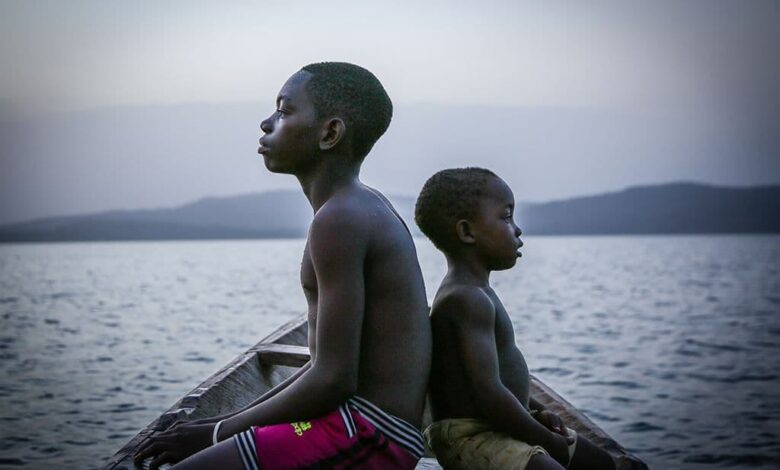
Assessments by organisations like the International Justice Mission Ghana indicate that over 57% of children working on sections of southern Lake Volta are subjected to hazardous forced labour, with victims documented as young as four to six years old.
Research by Free the Slaves have identified some vulnerable regions across specific rural and coastal communities in the Volta, Central, and Eastern regions revealed that up to one-third of households studied were impacted by child exploitation or trafficking.
Approximately, 50% of identified child exploitation instances are tied to the fishing industry, followed by 27% in domestic servitude, with the remainder spread across agriculture, street hawking, and forced begging (foreign nationals across the sub-African region victim of forced begging on the streets)
Child traffickers often exploit extreme household poverty, ‘hiring’ children from parents for low sums ranging from GH¢100 ($25) to GH¢300 ($60).
Despite Ghana’s economic challenges, the country has made some significant improvement in the fight against child trafficking in recent years, gaining recognition from some international bodies. For example,
the U.S. State Department’s Trafficking in Persons Report classifies Ghana on Tier 2, recognizing active government anti-trafficking plans and prosecutions alongside persistent structural enforcement challenges.
The Ghana Police Service’s Anti-Human Trafficking Unit (ATHU) and specialized NGO like the International Justice Mission (IJM) operations routinely conduct joint rescue operations, such as recovering dozens of trafficked children in targeted regional swoops.
Recorded human trafficking cases handled by the Anti-Human Trafficking Unit of the Ghana Police Service rose from 95 cases in 2024 to 137 cases in 2025, alongside a dramatic surge in rescue operations.
While 95 recorded cases with 250 victims rescued in 2024, 2025 saw 137 recorded cases (with broader reporting reflecting up to 1,202–1,207 rescued victims) with only eight convictions secured by the unit in each respective year, highlighting an ongoing conviction gap despite higher rescue operations.
Cumulative data from major operational briefings also reveals that, at least, 141 rescued victims and 40 arrests directly attributed to police anti-human trafficking operations across the country from January to July 2026 were made.
As part of education to curb child trafficking practices, the International Justice Mission (AJM) a non-governmental agency over the years has organized workshops for Communities, Churches, Media Practitioners and other groups to understand the growing effects of child trafficking on the future of a trafficked child (Person), the negative impact on education, health and the large economy of the country.
And as the World marks today as “World Trafficking Day in Persons” it’s important for us as a country to reflect on the challenges, the impact and the gains made on victims of child trafficking.
It’s also important for the government to take a relook at the budget allocations made to state agencies mandated to fight the menace.
More importantly, more prosecutions and convictions of traffickers will also deter others from engaging in the act.
The media must deeply get involved by introducing programs toilored against child trafficking. The Church and other Religious bodies should not be missed out in the fight.
When all of us get involved we will surely give our children a good environment to grow well.