
Rosatom Urges Stronger Nuclear Safety Guarantees as Global Nuclear Expansion Accelerates

|
Getting your Trinity Audio player ready...
|
By: Ahoto John Justice
Russia’s state nuclear corporation Rosatom has called for stronger international guarantees to protect nuclear facilities and ensure continued access to critical resources and infrastructure during crises, as countries move to expand nuclear power capacity.
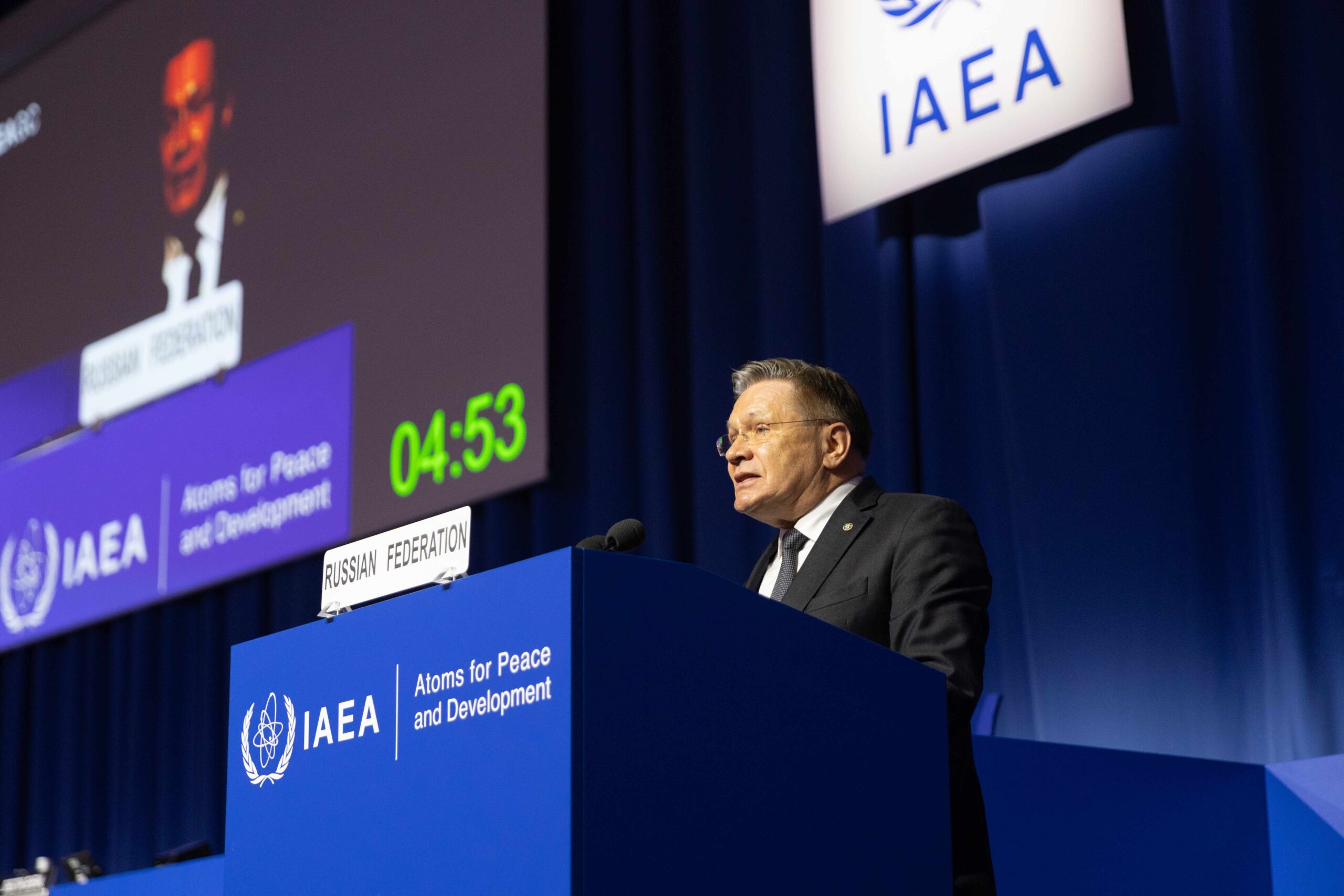
Rosatom Director General Alexey Likhachev made the call on Tuesday spetmber 15th 2026 during the plenary session of the 70th General Conference of the International Atomic Energy Agency (IAEA) in Vienna.
Likhachev said the renewed global expansion of nuclear energy was taking place against a backdrop of growing threats to nuclear facilities, making nuclear safety and international oversight increasingly important.
“Today, the world is experiencing a renaissance in nuclear energy while at the same time facing unprecedented threats to nuclear facilities.” He said
He said plans to expand global nuclear capacity by the middle of the century were being driven by rising electricity demand, concerns over climate change and efforts by countries to strengthen energy security.
Likhachev also pointed to attacks and military-related incidents involving nuclear facilities as evidence of the risks facing the sector.
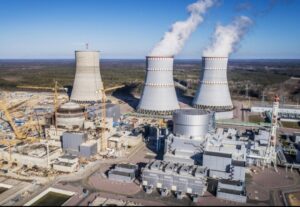
The most prominent example has emerged from the war in Ukraine, where the Zaporizhzhya Nuclear Power Plant (ZNPP), Europe’s largest nuclear power plant, has remained at the centre of international nuclear-safety concerns since Russia’s full-scale invasion of Ukraine in February 2022.
The IAEA has repeatedly reported explosions, military activity and damage to infrastructure at or near the facility. In April 2024, the Agency reported drone attacks at the ZNPP site, including an incident involving the Unit 6 reactor dome.
The IAEA said the attacks represented a serious deterioration in nuclear safety and security at the plant, although responsibility for individual incidents has at times remained disputed.
The vulnerability of nuclear infrastructure was highlighted again in February 2025 when a drone struck the New Safe Confinement structure covering the destroyed Unit 4 reactor at the Chornobyl nuclear site.
The IAEA reported that the strike caused damage and a fire at the structure. The Agency said its personnel assessed the damage but did not independently establish who was responsible for the attack.
The incidents have intensified international concerns over the consequences of military activity around nuclear installations and the need to protect reactors, spent-fuel facilities, external power supplies and other infrastructure essential to nuclear safety.
Against this backdrop, Likhachev argued that the role of the IAEA in monitoring and safeguarding nuclear facilities had become increasingly important.
On the sidelines of the conference, Likhachev met IAEA Director General Rafael Grossi for discussions on the situation at the Zaporizhzhya Nuclear Power Plant.
According to Rosatom, Likhachev welcomed the continued presence of IAEA personnel at the plant, with the 35th rotation of Agency observers taking place this week.
He also called for what Rosatom described as an objective assessment by the IAEA of incidents affecting the facility, beyond simply documenting attacks.
Rosatom said Grossi reaffirmed his commitment, together with the IAEA Secretariat, to working with Russia to help ensure safety at the ZNPP and to maintaining dialogue over the facility.
The two officials also discussed the continued presence of IAEA personnel at the plant, which Rosatom described as an important element of international monitoring and confidence-building.
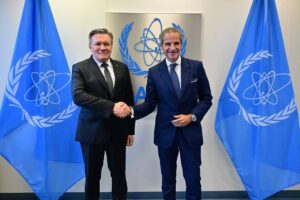
The IAEA has maintained a permanent presence at the ZNPP since September 2022, with its personnel monitoring nuclear safety and security conditions at the site.
The renewed debate over nuclear safety comes as several African countries explore or develop nuclear-power programmes to address growing electricity demand, strengthen energy security and reduce carbon emissions.
For countries considering nuclear power, the experience of Ukraine has added another dimension to the debate: nuclear safety is not limited to the design and operation of reactors during normal conditions but also involves protecting nuclear installations and critical infrastructure during emergencies and armed conflict.
Reliable electricity infrastructure, secure supply chains, emergency preparedness, trained personnel, physical protection and effective regulatory systems are among the requirements for the safe development and operation of nuclear facilities.
As interest in nuclear energy expands globally, the challenge for governments and international institutions will increasingly include ensuring that new and existing nuclear facilities remain safe and secure even under severely disrupted conditions.