
|
Getting your Trinity Audio player ready...
|
By Samuel Asamoah
Education authorities in the Ashaiman Municipality have raised alarm over the growing number of school children suffering from severe visual impairment and other forms of disabilities, revealing that hundreds of affected pupils are struggling to learn in classrooms without the needed assistive support.
The disturbing revelation emerged after a special screening exercise conducted in 10 out of the 24 public schools within the municipality by the Ashaiman Education Directorate.

According to the Special Education Coordinator for the Ashaiman Education Directorate, Belinda Mawuse Lewu, the exercise identified at least 527 pupils with severe eye problems who urgently require corrective eye glasses to enable them continue their education effectively.
She explained that many of the children had been silently battling learning difficulties for years because their conditions had either not been detected early or their parents could not afford the needed medical and assistive support.
“Most of the children find it difficult to read from the board and they write out of line. After identifying children with special needs, it emerged that many of them have visual impairment,” she disclosed.
Ms. Lewu noted that because Ghana has only one assessment centre for such cases, located in Accra, many families are unable to complete the referral and treatment process due to financial difficulties.
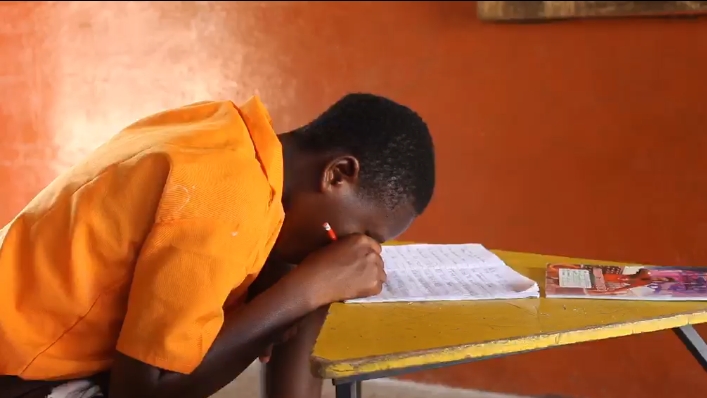
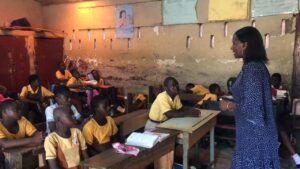
A visit by this reporter to the Ashaiman Cluster of Schools revealed the painful reality confronting many of the affected pupils. Some of the children were seen sitting very close to classroom boards, straining their eyes in attempts to see what teachers had written during lessons.
Teachers at the schools lamented that several of the affected pupils are academically gifted and eager to learn, but their visual challenges are gradually rendering them helpless in class activities.
According to some teachers, the inability of parents to provide corrective eye glasses and other assistive devices is negatively affecting the confidence and performance of the children.
Ms. Lewu lamented that several of the affected children possess great academic potential but are gradually becoming helpless because they lack basic learning support such as prescription glasses.
“Some of these children are very intelligent, but because their parents cannot afford the assistive devices, they are struggling in school. Sometimes I even use my own pocket money to assist some of them,” she revealed emotionally.
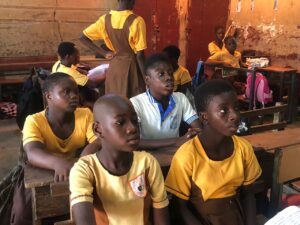
Beyond the visual impairments, the screening also uncovered other forms of disabilities and learning challenges among pupils in the municipality. The findings showed that five children were living with physical disabilities, 25 had learning difficulties, while two pupils each were identified with speech and hearing impairments respectively.
The Municipal Chief Executive for Ashaiman, Freeman Stekpo, described the situation as alarming and called for urgent intervention from corporate institutions, philanthropists and the general public.

“It is alarming to me,” he stated, stressing that although the Assembly had procured some eye glasses to support a number of the affected pupils, the resources available remain woefully inadequate.
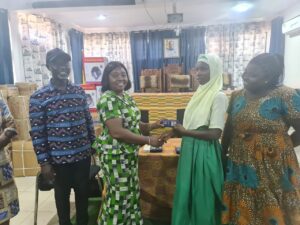
According to him, the Assembly’s Disability Fund is overstretched and unable to fully cater for the growing number of children requiring support.
Mr. Stekpo explained that the Social Services Sub-Committee of the Assembly had therefore been compelled to prioritise support for vulnerable elderly persons so they could in turn assist children under their care.
He appealed to Corporate Ghana, non-governmental organisations and benevolent individuals to support the municipality with eye screening equipment, corrective glasses and other assistive devices to help save the future of the affected children.
Ms. Lewu has meanwhile called on the government to clearly outline and dedicate a quota from the Disability Fund specifically for children living with disabilities to ensure they receive timely support and educational assistance.
She stressed that many children with disabilities are being left behind because the current support systems are inadequate and often inaccessible to struggling families.
The MCE also urged parents to take the welfare and health conditions of their children seriously by seeking early medical attention whenever they observe signs of learning difficulties or visual challenges.
Education and child welfare advocates say the situation highlights the urgent need for stronger investment in inclusive education and early disability detection systems across Ghana’s public schools.
They warn that without timely intervention, many brilliant children risk falling behind academically, not because they lack intelligence, but simply because they cannot clearly see the blackboard.