
Agriculture Takes Lion’s Share Of 2027 Budget As Mahama Bets on Food to Reset Economy

|
Getting your Trinity Audio player ready...
|
By: Edward Graham Sebbie
For the 2027 Budget which Finance Minister Dr. Cassiel Ato Forson is expected to present today, Thursday 12th November 2026 at 6pm, Agriculture has emerged as the biggest winner.
According to pronouncements by President John Dramani Mahama at Anloga and in meetings with traditional authorities, the 2027 Budget will be anchored on a new $9 billion to $10 billion New Economy Programme to run from 2027 to 2030.
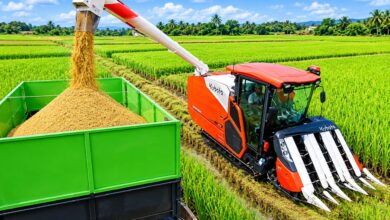
Under the programme, agriculture gets 50% of the entire package. Out of the $10 billion total, $5 billion is earmarked for Commercial Agriculture and Agribusiness alone over the four-year period.
This translates to about $2.5 billion per year across all sectors, with $1.25 billion yearly dedicated to agriculture.
Dr. Forson this week at KNUST clarifying the financing model said government will invest 1.5% of GDP per year, potentially raising the total envelope to $13 billion, without new borrowing. The financing will come from new revenue measures equivalent to 0.5% of GDP and a reduction in the primary surplus target from 1.5% to 0.5%.
President Mahama said the massive investment will expand commercial farming, irrigation and year-round farming, as well as agro-processing and value addition to stop the export of raw produce and reduce food import dependence.
Priority areas highlighted include:
– Oil Palm: President Mahama stated, “One of the priority areas is oil palm. There is no reason Ghana should continue importing vegetable cooking oil when we have the land to produce oil palm ourselves.” He asked traditional authorities to release land and also take part directly in plantations for community income.-
– Poultry (Nkoko Nkitinkiti): Ghana spends almost $500 million every year importing chicken. The programme will support small, medium and large-scale poultry farmers, with beneficiaries expected to reinvest proceeds to expand.
– Tomato Revitalisation Project and completion of the Bechem Broiler Processing Plant.
The programme according to the President will be private sector led, “Government is not in business; it is the private sector that will manage it,”
Other Agric Allocations Hinted for 2027
– GH¢500 million for silos at strategic locations under the Food Buffer System. Agric Minister Eric Opoku has already disclosed that government has procured 30,000 metric tonnes of grains as buffer stock – a first in Ghana’s history.
– 506 Agric Brigade Officers deployed under the Feed Ghana Programme to provide extension services at district level across the country.
– Special focus on regions like Volta for commercial agriculture, alongside textiles, garments, hospitality and tourism.
The New Economy Programme has seven pillars, with Commercial Agriculture and Agribusiness as Pillar One. The other pillars are Manufacturing and Industrial Expansion, Energy Reforms, Critical Minerals and Value Addition, Cotton, Textiles and Garments, Tourism, Culture and Creative Economy, and Pharmaceutical Manufacturing.
In summary, the 2027 Budget marks a shift from IMF-driven stabilization to production, with agriculture alone taking half of all new investment to reset growth, create jobs and ensure food security.