
|
Getting your Trinity Audio player ready...
|
By Edward Graham Sebbie
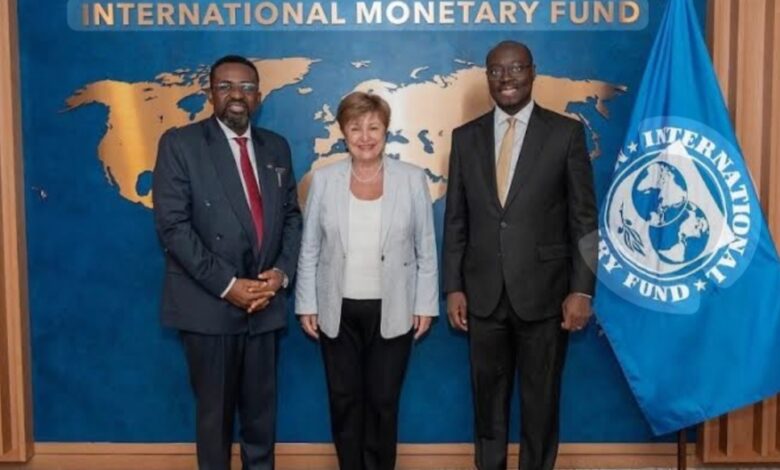
Ghana has formally ended its International Monetary Fund, IMF, financial bailout program and is transitioning to a non-financing policy support arrangement, marking what the government terms the definitive close of its extended credit facility relationship with the Fund.
A communication issed by government’s spokesperson and Minister of Information, Felix Ofosu Kwakye, confirms that Ghana has completed the Extended Credit Facility program ahead of schedule, after the restoration of macroeconomic stability and debt sustainability. The turnaround follows a period in late 2024 when the program derailed, prompting the John Mahama-led administration to relaunch it in 2025 with aggressive fiscal consolidation, expenditure cuts, and structural reforms.
The government reports a significant reduction in inflation and a marked strengthening of the cedi, reduced public debt as a share of GDP has declined sharply, and economic growth rebound, shoring gross international reserves to hit an all-time high of about 14.5 billion dollars by February 2026, translsting into nearly six months of imports cover. This buffer, according to the government gives Ghana room to absorb external shocks without external financing.
Ghana’s sovereign rating moved from restricted default to ‘B’ with a positive outlook representing a five jump notches. Officials attribute this to improved fiscal performance, normalized creditor relations, stronger external buffers, and renewed market confidence.
As a result of these gains, Ghana will now work under the IMF’s Policy Coordination Instrument, PCI which unlike the ECF comes with no financing, but provides a technical assistance tool meant to help implement reforms, signal policy commitment, and improve credibility with private investors and development partners.
The government frames the PCI as a bridge to an investment-grade rating, saying hitting that level would lower borrowing costs for both the state and private sector, attract long-term institutional investors, increase foreign direct investment, and unlock cheaper financing for infrastructure and business growth.
President Mahama’s administration credited Ghanaians, bilateral creditors, the Official Creditor Committee, and domestic and external investors for their sacrifice, resilience and forbearance during the adjustment period. It reiterated a commitment to good governance, fiscal discipline, and creating an attractive investment climate.
The immediate signal which looks clear after years of bailout dependence, Ghana is betting that stability and technical backing, not fresh IMF cash, will be enough to sustain the recovery and draw private capital back in.