
|
Getting your Trinity Audio player ready...
|
By: Samuel Asamoah
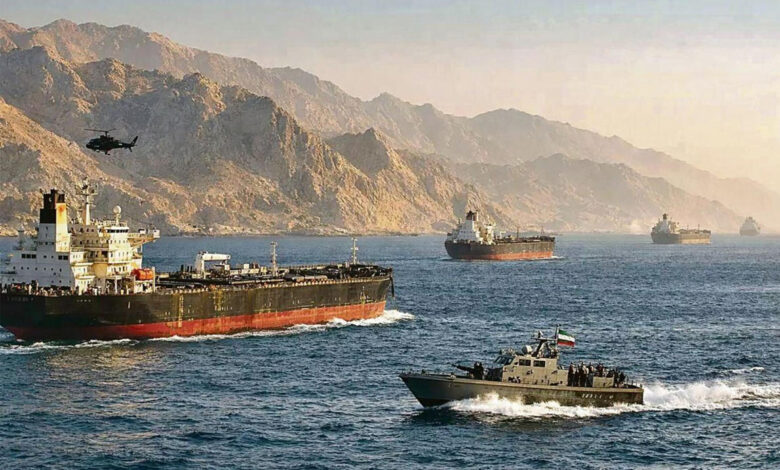
The disruption of shipping through the Strait of Hormuz is presenting the global maritime industry with one of its clearest reminders in years: countries that can provide safe, efficient and reliable maritime services have an opportunity when global shipping networks come under pressure.
For Ghana, the crisis could therefore become more than a threat.
It could become a test of whether the country can convert its strategic position on the Gulf of Guinea into a stronger blue-economy and maritime-services economy.
The opportunity, however, should not be exaggerated.
There is currently no evidence that ships are diverting in large numbers to Ghana because of the Hormuz conflict.
But there are already strategic investments and policies that could position Ghana to benefit from changing global shipping patterns.
Ghana’s maritime infrastructure
Tema is Ghana’s largest port and one of the country’s principal gateways for international trade.
GPHA says 85 percent of Ghana’s trade is conducted through Tema and Takoradi ports, with shipping routes connecting the country to all continents.
The government is simultaneously expanding the country’s maritime infrastructure.
The Transport Ministry says the first two phases of the $1.5 billion Tema Port Expansion Project have been commissioned and that government wants Ghana to become a leading efficient, secure and sustainable maritime logistics hub in West Africa.
Takoradi provides a different opportunity.
GPHA reports that the port handled 36.8 percent of Ghana’s national seaborne traffic and 77.4 percent of seaborne exports in 2024.
The port handles cocoa, manganese and bauxite exports, among other cargoes, while also supporting Ghana’s oil-and-gas and mining industries.
From cargo handling to maritime services
The biggest opportunity may therefore not be simply handling more containers.
It could be moving Ghana further up the maritime value chain.
That means expanding:
bunkering and marine-fuel services;
ship repair and maintenance;
offshore-support services;
maritime logistics;
warehousing and cargo consolidation;
marine insurance and financial services;
seafarer training;
maritime technology;
port-related manufacturing; and
environmental and marine-monitoring services.
Ghana already has a base from which to build.
GPHA reports 24-hour bunkering services at Tema through GOIL’s marine gas-oil tank farm, which has a capacity of 13.5 million litres.
The government has also said Ghana is pursuing green shipping corridors and has upgraded the Vessel Traffic Management System to an extended 200-nautical-mile monitoring capacity.
Security is now an economic asset
The Hormuz crisis adds another dimension to Ghana’s opportunity: maritime security.
The IMO says the Middle East crisis has affected around 20,000 seafarers, port workers and offshore crews and has confirmed 73 maritime incidents and 21 seafarer fatalities.
This demonstrates that security is no longer merely a defence issue for maritime nations.
It is an economic asset.
A port that can demonstrate secure waters, reliable vessel traffic management, efficient clearance and predictable operating conditions becomes more attractive to shipping companies and cargo owners.
Ghana says it has achieved 100 percent compliance with the International Ship and Port Facility Security Code and has strengthened its vessel-monitoring capacity.
The challenge is turning those capabilities into measurable commercial advantages.
The Hormuz lesson
Before the conflict, the Strait of Hormuz was one of the world’s most important energy corridors.
Now vessel movements have fallen sharply.
On September 9, only seven commodity vessels were recorded transiting the strait, while global oil prices remained above $100 per barrel.
Meanwhile, Reuters reports that marine-fuel prices in Singapore remain more than 60 percent above pre-war levels, although supply has stabilised.
The crisis demonstrates how quickly geopolitical instability can affect the economics of shipping.
For Ghana, that should trigger a serious policy conversation about resilience.
What happens if global shipping becomes more expensive?
Can Ghana reduce vessel turnaround times sufficiently to remain competitive?
Can Tema offer internationally competitive bunkering?
Can Takoradi become a genuine West African offshore-services centre?
Can Ghana develop ship-repair capacity that attracts vessels beyond the domestic market?
Can the country’s maritime-security infrastructure become a commercial selling point?
And can Ghana develop blue-economy industries that create value beyond simply moving cargo through its ports?
The danger of becoming complacent
There is, however, a warning.
A geopolitical crisis does not automatically make Ghana a winner.
Shipping companies choose routes based on cost, security, port efficiency, cargo demand, infrastructure, draft, connectivity and reliability.
Ghana must therefore compete.
The current congestion concerns at Tema demonstrate why.
The Ghana Shippers’ Authority recently reported that growing cargo volumes were placing intense pressure on Tema Port operations and causing congestion and delays in cargo clearance.
That means the country’s blue-economy opportunity begins at home.
A global shipping crisis may create opportunities, but Ghana will only capture them if its ports are efficient enough, its maritime services competitive enough and its regulatory environment predictable enough.
The bigger opportunity
The most important lesson from Hormuz may therefore be this:
Ghana should not wait for the next global maritime crisis before building maritime resilience.
The country has the coastline.
It has two major commercial ports.
It has access to the Atlantic.
It has an emerging offshore-services industry.
It has regional markets to its north.
And government has already identified the maritime and blue economy as strategic areas for economic development.
What remains is to connect these assets into one coherent economic strategy.
If that happens, Ghana could move from being primarily a country through which goods pass to becoming a country where ships, cargo, maritime technology, marine services and blue-economy businesses create substantially more value.
The Strait of Hormuz crisis is therefore not Ghana’s crisis.
But it is a warning.
In an increasingly uncertain world, maritime resilience is economic resilience—and countries that understand that early will have an advantage.