
|
Getting your Trinity Audio player ready...
|
By Samuel Asamoah
A new continental report has called on global leaders to prioritise water security in climate adaptation planning and financing, warning that young people across Africa continue to bear the consequences of climate change despite having limited influence over decisions that affect their communities.
The report, released by the African Youth Water and Climate Engagement Initiative (AYWCEI), highlights significant gaps in youth participation, community preparedness and financial support for youth-led interventions addressing water and climate challenges.
Drawing on responses from 1,209 young people across 51 African countries and consultations involving 984 participants across five sub-regions of the continent, the findings paint a troubling picture of the growing vulnerability of African communities to climate-related water insecurity.
According to the report, 76 per cent of young respondents say they have no meaningful voice in water and climate-related decisions, while 52 per cent believe their communities are inadequately equipped to withstand climate impacts.
The findings further indicate that 29 per cent of respondents have already lost, or are in the process of losing, livelihoods dependent on water resources, underscoring the economic consequences of climate vulnerability.
A particularly worrying finding is the limited financial support available to young people driving community-level interventions, with only nine per cent of respondents aware of a youth-led initiative that has received funding.
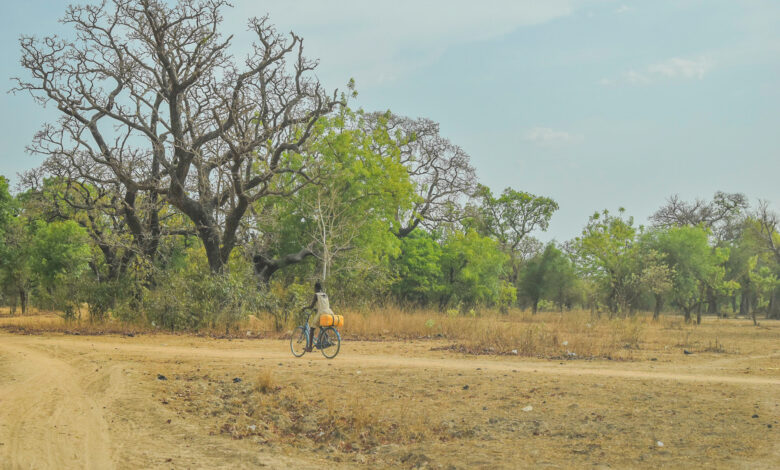
The report also draws attention to the disproportionate burden of water insecurity on women and girls, particularly in rural communities where access to safe water often requires long and sometimes dangerous journeys.
Emmanuella Chukwudi, a young participant from Nigeria, recounted how girls in her community are frequently compelled to travel to neighbouring villages in search of water, exposing them to serious safety risks.
She cited an incident involving a girl who was reportedly sexually assaulted while fetching water from a neighbouring village and subsequently discovered to be pregnant.
Farmers, she added, are also among those significantly affected by the challenges.
Climate Director at the Green Africa Youth Organization (GAYO), Baliqees Salaudeen-Ibrahim, said the initiative was designed to establish a clearer understanding of the continent’s water challenges and examine how young people are responding to them.
She said GAYO was working to identify youth-led interventions with the potential to attract investment, expand across communities and be replicated in other parts of Africa.
The initiative, led by GAYO with support from the Children’s Investment Fund Foundation (CIFF), is seeking to mobilise resources to transform promising community-level interventions into sustainable solutions.
Chief Executive Officer of CIFF, Kate Hampton, said young people should be recognised not merely as victims of climate change but as active contributors to addressing its effects.
She noted that young people were already implementing practical interventions within their communities, stressing the importance of documenting and supporting their efforts.
The report is anchored in AYWCEI’s African Youth Water and Climate Position Statement, which outlines 12 priorities covering water security, sanitation, climate adaptation, adaptation financing and water governance.
Its central recommendation is that water must become a fundamental consideration in global climate adaptation strategies and the allocation of climate finance, while youth-led initiatives should receive the financial backing required to deliver measurable results.
The findings come amid calls by African negotiators at COP31 for predictable adaptation financing and a stronger focus on implementation, with water-related concerns identified as a critical component of the continent’s climate priorities.
AYWCEI is expected to present the report at the 2026 United Nations Water Conference scheduled for December 8 to 10 in Abu Dhabi, United Arab Emirates.
The conference will bring governments and development partners together to accelerate progress towards Sustainable Development Goal Six, which seeks to ensure access to clean water and sanitation for all.
The initiative will subsequently take its advocacy to COP32 in Addis Ababa, Ethiopia, in 2027, with a focus on securing support for community-led solutions that can be financed and scaled up.
For millions of Africans facing unreliable water access and climate-related livelihood disruptions, the report argues that the challenge is no longer simply recognising the problem, but translating evidence and youth-led innovation into adequately funded action.