
Last-Mile WASH Failure Now a Present Reality, Not Future Risk – Works Minister Warns as Climate Threat Escalates

|
Getting your Trinity Audio player ready...
|
By: Samuel Asamoah
Ghana’s water, sanitation and hygiene (WASH) systems are already coming under pressure from climate change, with last-mile communities bearing the brunt through broken boreholes, unusable toilets and unreliable water services, Minister for Works, Housing and Water Resources, Ahmed Ibrahim, has warned.
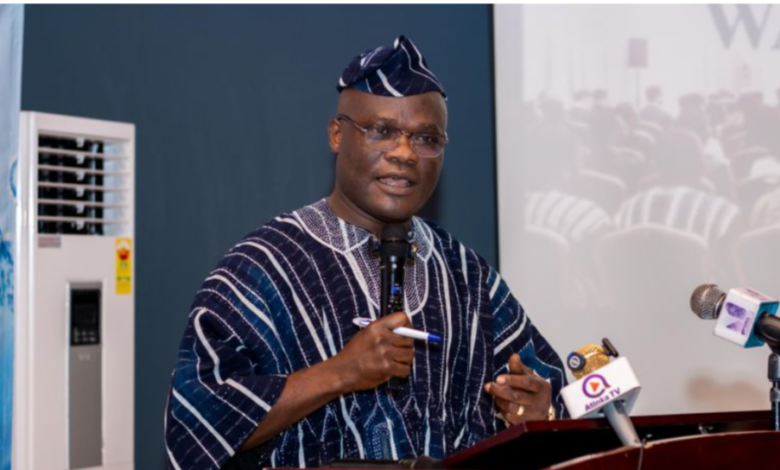
Opening the MOLE XXXVII WASH Conference at Aqua Safari, Ada, on behalf of President John Dramani Mahama, the Minister said Ghana must urgently close persistent service delivery gaps while building resilient systems capable of withstanding increasing climate pressures.
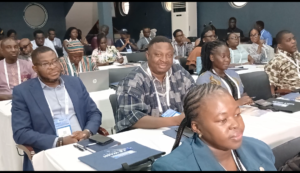
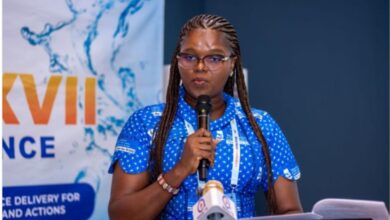
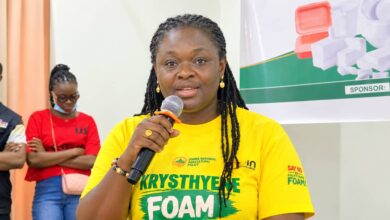
The conference, held under the theme “Accelerating Climate-Resilient WASH Service Delivery for Last-Mile Communities,” brought together government officials, development partners, traditional authorities, civil society organisations and WASH sector professionals to examine the country’s progress and challenges towards achieving universal access to safe water and sanitation by 2030.
In a related call for renewed commitment, stakeholders at the conference acknowledged that achieving climate-resilient WASH services would require stronger institutional coordination, sustainable financing, effective regulation and greater accountability at both national and community levels.
The Minister admitted that although Ghana had made progress in expanding basic water coverage, access to safely managed services remained limited, sanitation development was lagging, and open defecation persisted, particularly among poor, riverine and island communities, women, girls and persons with disabilities.
“Prolonged dry seasons reduce reliability of sources. Intense rainfall damages infrastructure and contaminates water points. For last-mile communities, these are not future risks. They are present realities that determine whether a borehole functions,” he said.
The concerns were reinforced by the Chairperson of the Coalition of NGOs in Water and Sanitation (CONIWAS), Dr Beata Awinpoka Akanyani, who highlighted persistent inequalities in access to basic water services between urban and rural communities.
She cited figures indicating that basic water coverage stood at 96.4 per cent in urban areas, compared with 74.4 per cent in rural communities, underscoring the disproportionate burden faced by underserved populations.
Dr Akanyani also drew attention to declining rural hygiene access, which had fallen from 36 per cent to 31 per cent, alongside a financing gap exceeding US$1.5 billion.
She further raised concerns about the absence of the Joint WASH Sector Working Group since January 2025, stressing the importance of effective stakeholder coordination and sustained sector dialogue in addressing the country’s WASH challenges.
The traditional authority also weighed in on the urgency of protecting water resources, with Paramount Chief Djetse Nene Abram Kabu Akuaku III describing access to safe water as an issue of justice, dignity and human rights.
He called for greater protection of the Volta River, its estuary, coastline and the Songor Lagoon, warning against activities that threaten the environmental resources upon which communities depend for their livelihoods and water security.
Returning to the government’s policy direction, Mr Ibrahim anchored his address on the 2024 Presidential Compact on WASH, which commits substantial annual resources towards achieving universal access by 2030.
He, however, cautioned that the compact must move beyond political declarations to measurable improvements in the lives of ordinary Ghanaians.
He outlined five critical priorities for accelerating progress: climate-resilient infrastructure and design standards; professionalised rural service delivery models to replace ineffective purely community-managed systems; targeted financing that combines climate finance and private capital; equity-focused monitoring that measures service reliability rather than coverage alone; and stronger coordination across national, regional and local institutions.
The Minister also disclosed that Ghana would co-chair the “Water for People” dialogue with Switzerland at the United Nations Water Conference in Abu Dhabi in December, indicating that resolutions from MOLE XXXVII would help shape the country’s contributions to global water commitments.
The discussions at Ada have consequently placed renewed emphasis on the need to translate policy commitments, available resources and stakeholder partnerships into reliable services for communities that remain at the margins of national WASH development.
With climate change intensifying pressure on water resources and sanitation infrastructure, participants are expected to use the conference to strengthen the sector’s collective response and advance practical solutions for vulnerable communities.
“The last mile will not be closed by statements alone,” the Minister declared.