

|
Getting your Trinity Audio player ready...
|
By: Samuel Asamoah
WaterAid Ghana has called on the government to allocate US$1.7 billion to the Water, Sanitation and Hygiene (WASH) sector in the 2027 national budget, warning that inadequate investment could undermine public health, food security, job creation and Ghana’s long-term economic transformation.
The call comes ahead of the presentation of the 2027 budget and economic policy statement by Finance Minister Dr Cassiel Ato Forson to Parliament in November 2026.
In a policy commentary, Ibrahim Musah, Head of Strategy, Policy and Campaigns at WaterAid Ghana, said the government must channel the gains from economic stabilisation into critical water and sanitation infrastructure to improve living conditions and strengthen economic productivity.
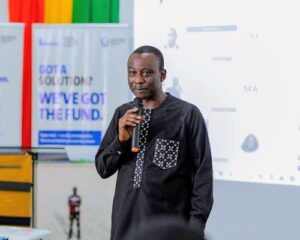
He argued that although Ghana was making progress towards macroeconomic stability, the benefits would remain limited if communities continued to struggle with inadequate water supplies and poor sanitation.
According to Mr Musah, the WASH sector must feature prominently in the government’s economic transformation agenda because access to safe water and a clean environment is essential for industrial development, agriculture, tourism and employment creation.
He also called for the proposed US$10 billion New Economy Programme to incorporate strategic WASH investments to help address unemployment and improve access to essential services.
CWSA faces investment funding shortfall
Mr Musah raised concerns about funding constraints facing the Community Water and Sanitation Agency (CWSA), which facilitates water supply services in rural communities and small towns.
He said the agency requested GH¢30 million in cash investment in the 2025 budget but received releases amounting to no more than 30 per cent of the requested investment funding.
This, he noted, contrasted with reported releases exceeding 90 per cent for goods and services and 95 per cent for employee compensation.
The shortfall, according to him, could constrain the agency’s ability to expand rural water infrastructure and support Ghana’s ambition of achieving universal access to water by 2030.
Mr Musah therefore urged the Ministry of Finance to prioritise capital investment for the agency to enable it to sustain ongoing reforms and improve access to safe water in underserved communities.
Calls for accountability in district water and sanitation funds
The WaterAid Ghana official also called for stronger monitoring of the District Assembly Common Fund (DACF) formula, which provides for 10 per cent allocation to water and another 10 per cent to sanitation.
He said the government must ensure that the allocations introduced in 2025 are effectively disbursed and utilised for their intended purposes across all 261 Metropolitan, Municipal and District Assemblies.
He warned that without a robust accountability framework, the potential benefits of the funding arrangement could be undermined.
Mr Musah maintained that although the allocations represented an important step towards sustainable WASH financing, additional resources would be required to address the sector’s infrastructure deficits and growing service demands.
Poor sanitation costs Ghana productivity
On sanitation, Mr Musah cited the 2021 Ghana Population and Housing Census, which put the country’s open defecation rate at 17.7 per cent.
He also referenced estimates by the Institute of Statistical, Social and Economic Research (ISSER) that Ghana loses approximately GH¢650 million through 31.9 million work and school days lost because of inadequate sanitation.
He said the figures underscored the economic consequences of underinvestment in sanitation, including preventable diseases, reduced productivity and increased pressure on healthcare services.
Mr Musah argued that every GH¢1 invested in sanitation could generate up to GH¢4.30 in wider economic and social returns, while estimates suggest that every US$1 invested in WASH could yield US$5 to US$6 in benefits.
He called for increased investment in community-level sanitation infrastructure, sanitation enterprises and women-led businesses to create jobs, reduce poverty and improve public health.
Water security linked to food production and climate resilience
Mr Musah warned that inadequate access to safe water could threaten agricultural productivity, food security and the livelihoods of vulnerable communities, particularly those in coastal areas and the savanna belt.
He said sustainable management of freshwater resources was critical to irrigation, food production and community resilience in the face of climate change, including prolonged dry spells and drought.
He called for increased funding for rural and small-town water supply systems, stressing that reliable water access was essential for households, businesses and local economic development.
He further urged the government to strengthen efforts to protect rivers and other freshwater sources from illegal mining, popularly known as galamsey.
According to him, the Water Resources Commission requires modern monitoring equipment to assess raw water quality and protect water bodies that supply treatment facilities.
He also advocated stronger collaboration between government, traditional authorities and the National House of Chiefs to safeguard the country’s water resources.
Ghana Water Limited urged to upgrade infrastructure
The WaterAid Ghana official also highlighted challenges facing Ghana Water Limited, including ageing pipelines, obsolete equipment and difficulties detecting illegal water connections.
He said these infrastructure weaknesses could affect the efficiency and sustainability of urban water supply, leaving households and businesses struggling to obtain reliable services.
Mr Musah called for investment in modern equipment, pipeline rehabilitation and improved water distribution systems to reduce losses and strengthen the delivery of safe water to consumers.
He stressed that sustainable water supply was essential not only for public health but also for businesses, industrial development and the generation of government revenue.
WASH investment could generate economic returns
Mr Musah said investment in water, sanitation and hygiene should be treated as productive economic infrastructure rather than merely a social expenditure.
He argued that improved WASH services could reduce diarrhoeal diseases, lower outpatient healthcare costs, improve school attendance and strengthen the participation of women and girls in education and economic activities.
He also said reliable water supplies and clean environments were essential to unlocking Ghana’s tourism potential.
The proposed US$1.7 billion allocation, he maintained, would help position the sector as a key driver of economic growth, poverty reduction and employment creation.
Government faces 2027 budget test
Mr Musah said the 2027 budget presented an opportunity for the government to translate economic stabilisation into tangible improvements in the lives of Ghanaians.
He urged the government to increase WASH financing, strengthen accountability for existing allocations and provide adequate capital funding to the agencies responsible for water supply and resource protection.
He maintained that without sustained investment in water, sanitation and hygiene, Ghana’s ambitions for improved public health, food security, industrial growth and climate resilience could be difficult to achieve.
WaterAid Ghana is therefore urging the government to commit US$1.7 billion to the sector in the 2027 budget, arguing that the country’s next phase of economic transformation must be built on reliable water services, adequate sanitation and improved hygiene.