
Ghana, World Bank Call for Stronger Digital Integration to Improve Maritime Trade

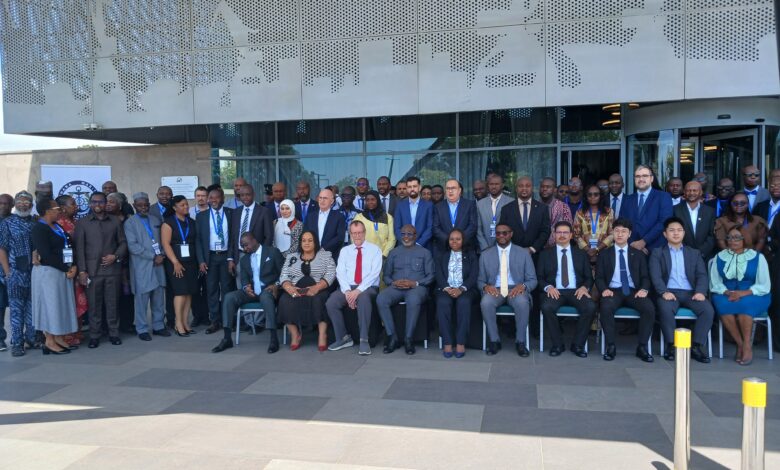
The Ghana Maritime Authority and the World Bank have called for stronger institutional coordination and the integration of digital systems to reduce administrative bottlenecks, improve port efficiency and strengthen trade competitiveness across West Africa.
The call was made at the opening of a sub-regional workshop on the Maritime Single Window and Port Community Systems, organised with support from the International Maritime Organization (IMO) and the World Bank to promote digital transformation and facilitate maritime trade.
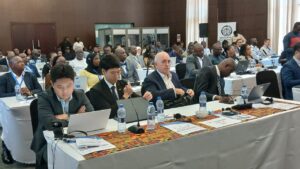
Delivering the Minister of Transport’s keynote address, Mr Merlyn Gaskin, Director of Research, Statistics and Information Management at the Ministry of Transport, said Ghana must build on its existing digital infrastructure to establish a more efficient, transparent and coordinated system for processing maritime information.
He said unnecessary delays, repeated submission of information and weak coordination among public institutions ultimately increase costs for businesses and consumers while undermining national economic competitiveness.
“Our responsibility as a government is to ensure fast, reliable and transparent port clearance systems that support our economic ambition and strengthen our competitiveness in the international trading system,” he said.
Mr Gaskin noted that Ghana’s ports, particularly Tema and Takoradi, remained strategic national assets that connect local businesses to international markets, generate government revenue, create employment and support livelihoods.
He said improving their efficiency and competitiveness was essential to Ghana’s ambitions to expand trade, attract investment and strengthen its position as a commercial gateway in West Africa.
Ghana to Build on Existing Digital Systems
The government said Ghana had made progress in modernising port operations through the Integrated Customs Management System (ICUMS) and electronic information exchanges among maritime stakeholders.
However, Mr Gaskin stressed the need to address implementation gaps and strengthen cooperation among institutions to ensure the systems delivered measurable improvements in vessel clearance and port operations.
The Ghana Revenue Authority, Ghana Ports and Harbours Authority (GPHA), Ghana Maritime Authority (GMA) and other public and private sector institutions were commended for their contributions to the modernisation efforts.
He said the workshop should produce practical outcomes, including stronger institutional cooperation, adequate technical and financial support, and a realistic roadmap towards the full implementation of Ghana’s Maritime Single Window.
Mr Gaskin added that cooperation among West African countries was critical because maritime trade crossed national borders and required efficient information exchange between ports and other trade-related institutions.
GMA Identifies Institutional Coordination as a Challenge
In his welcome address, the Director-General of the Ghana Maritime Authority, Dr Kamal-Deen Ali (Naval Captain, Rtd.), called for a concerted effort to strengthen existing digital systems and improve coordination among institutions responsible for maritime trade and safety.
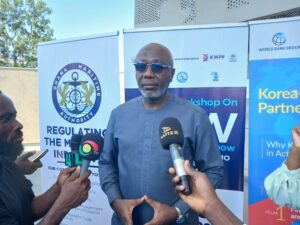
Dr Ali cited ICUMS, the vessel clearance system used by GPHA and the GMA’s vessel traffic monitoring system as examples of existing systems whose effectiveness could be enhanced through better coordination and integration.
He said the interaction between maritime trade facilitation and safety was particularly important, requiring institutions to work together more effectively.
Dr Ali also identified institutional ownership and control as potential challenges to implementing a Maritime Single Window, noting that agencies must prioritise their shared responsibility to facilitate trade.
He said the three-day workshop would provide an opportunity for participating countries to exchange experiences, examine implementation challenges and develop a roadmap for improving maritime trade facilitation in Ghana.
The discussions are expected to explore how existing systems could be refined and connected to create a more cohesive and effective digital environment for maritime operations.
World Bank Warns Against Fragmented Digitalisation
Senior Trade Facilitation Specialist at the World Bank, Satya Sahu, cautioned that digitising individual processes without connecting the systems involved did not amount to genuine digital transformation.
He explained that shipping lines, port authorities, customs, immigration, health authorities, terminal operators, freight forwarders and other stakeholders generated large volumes of information before vessels arrived at ports.
However, where institutions operated disconnected platforms, businesses could be required to submit the same information repeatedly, increasing administrative burdens instead of eliminating them.
Mr Sahu said the Maritime Single Window and Port Community Systems served different but complementary purposes.
The Maritime Single Window provides a coordinated digital environment for completing formalities associated with ships arriving at, remaining in and departing from ports.
A Port Community System, on the other hand, connects the wider port and logistics community, enabling information exchange to support the movement of vessels, cargo and containers through the port.
He said the two systems should be treated as institutional and operational reforms rather than merely information technology projects.
“It is relatively easy to procure software. It is much harder to get institutions to agree on what information should be exchanged, who owns that information, what standards should be used, how systems should talk to one another, and who will govern the platform once it becomes operational,” he said.
Mr Sahu called for clear institutional responsibilities, effective governance arrangements, an enabling legal and regulatory framework, common data standards and systems capable of exchanging information securely.
He also stressed the need to involve private-sector operators in the design and implementation of the platforms, arguing that shipping lines, terminal operators, freight forwarders and transport companies were integral members of the port community rather than mere users of technology.
Regional Interoperability Key to Trade Competitiveness
Mr Sahu said digital transformation in maritime transport should extend beyond individual ports to connect customs clearance, terminal operations, logistics providers and wider trade networks.
He noted that West African countries did not necessarily need to adopt identical digital platforms but should ensure that their systems could communicate with one another using internationally recognised standards.
Such interoperability, he said, could improve efficiency within individual ports while strengthening connections between ports, trade corridors and countries across the subregion.
Mr Sahu urged participants to use the workshop to exchange practical lessons, including how countries had secured institutional cooperation, engaged private businesses and addressed interoperability challenges involving older systems.
He said the ultimate objective should be to make trade easier, improve port efficiency, strengthen government controls and enhance the competitiveness of maritime transport.
The workshop is expected to provide a platform for maritime administrations, port authorities, customs agencies, development partners and private-sector stakeholders to share experiences and identify practical solutions for advancing digital maritime trade facilitation.