
|
Getting your Trinity Audio player ready...
|
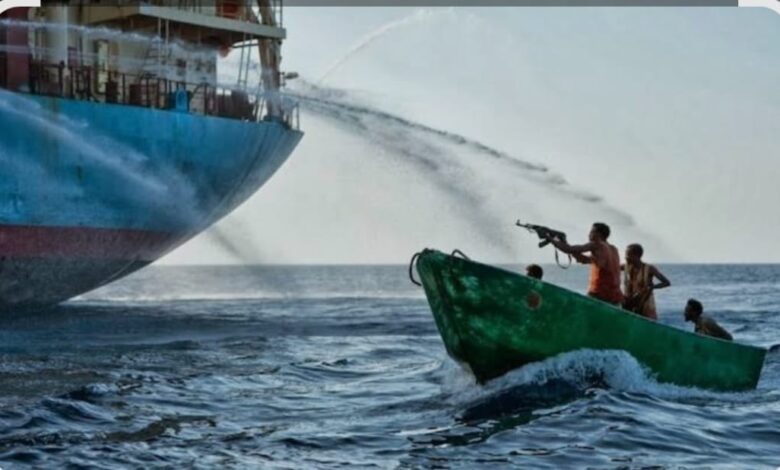
Ghana has taken a major step to reclaim safety on its territorial waters with the passage of the Maritime and Related Offences Bill, 2026, a landmark law that gives the state sweeping powers to hunt, arrest and jail pirates and sea robbers.
Parliament passed the Bill on June 30, 2026, during the Second Meeting of the Second Session of the Ninth Parliament. It was one of 12 key Bills passed in that session and now awaits Presidential assent.
For years, Ghana’s fight against maritime crime has been hamstrung by a legal vacuum.
Presenting the Committee’s report, Isaac Adjei Mensah, Chairman of Parliament’s Roads and Transportation Committee, told the House: “The absence of a dedicated legal framework on maritime offences in Ghana creates enforcement and prosecutorial challenges in dealing with piracy and related crimes. The enactment of this Bill will, therefore, provide the necessary legal basis for the investigation, arrest, prosecution and punishment of offenders.”
The law, officially titled An Act to prohibit piracy, robbery at sea and other maritime related offences does three critical things:
Closes the legal gap
It creates a comprehensive regime for the prevention, investigation, prosecution and punishment of piracy, armed robbery at sea and other maritime offences.
It domesticates international law
It gives full legal effect to the 1982 United Nations Convention on the Law of the Sea (UNCLOS), specifically Articles 100 to 105 on piracy, and the 1988 Convention for the Suppression of Unlawful Acts Against the Safety of Maritime Navigation (SUA Convention) and its Protocols.
It has wide jurisdiction
It applies to vessels flying the Ghanaian flag anywhere, to any vessel or aircraft in Ghana’s internal waters, territorial sea and on the high seas, and to all fixed and floating platforms in Ghana’s territorial sea, Exclusive Economic Zone and continental shelf.
Moving the motion for its Second Reading, Transport Minister Joseph Bukari Nikpe was blunt: “It is a maritime-related offences law. Any offence committed within our territorial waters falls under this legislation, irrespective of who the offender is.”
He said penalties will be proportionate to the offence, with courts to determine sentences within the framework established by the law.
The Gulf of Guinea has become the world’s piracy hotspot over the past decade, with vessel hijackings, kidnappings for ransom and armed robbery threatening trade, regional stability and the lives of seafarers.
The urgency was brought home just months before passage, when 71 fishermen from Gomoa Nyanyano and Senya Bereku in the Central Region were attacked at sea by suspected pirates who seized their outboard motors and fishing gear, crippling their livelihoods.
To ensure the law does not stay on paper, the Ghana Maritime Authority (GMA), in collaboration with the United Nations Office on Drugs and Crime (UNODC) and the European Union, held a two-day sensitisation workshop on August 5-6 in Accra.
Themed “Enhancing Maritime Security in Africa: Safe Seas for Africa,” the workshop brought together the Ministry of Transport, Ghana Navy, Ghana Air Force, Marine Police Unit and the Attorney-General’s Department to forge a joint enforcement strategy.
The maritime industry has welcomed the move. The Chartered Institute of Maritime and Allied Professionals (CIMAG) has hailed it as a major boost for Ghana’s blue economy, saying it will improve investor confidence and position Ghana as a secure maritime hub in West Africa.
Once assented to, the Act will finally give Ghanaian security agencies the legal teeth to prosecute pirates who have long exploited loopholes in the system.