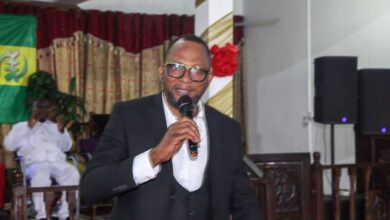

Nene Enock Tetteh Lanuel Okumo IV Remains Wetsoyi of Dangmebiawe Clan!
As Greater Accra Regional House of Chiefs returns contenders back to Ada


|
Getting your Trinity Audio player ready...
|
The Judicial Committee of the Greater Accra Regional House of Chiefs has set aside an undated judgment delivered by the Ada Traditional Council in the protracted Dangmebiawe Wetsoyi stool dispute, citing significant procedural breaches in the earlier trial. The Committee has directed that the matter be reheard de novo before a newly constituted panel of the Ada Traditional Council.
The decision does not confer a substantive victory on the Plaintiffs/Appellants, who had challenged the installation of Nene Enoch Tetteh Lanuel Okumo IV as the Wetsoyi of the Dangmebiawe Clan. Instead, the Regional House clarified that its ruling addresses procedural irregularities that compromised the integrity of the previous trial, ensuring a lawful and thorough adjudication of the succession dispute.

The dispute, filed under Suit No. GARHC/AP.3/2023, dates back to October 20, 2017, when the Plaintiffs/Appellants — including Foah-Teye Okumo, the late Alfred Ehitumi Okumo (substituted by Abraham Tsiani Narhwayo Okumo), Djangma Tawiah Okumo, Tsanie Osabutey, and Victor Lawer Okumo — instituted proceedings challenging the installation of Nene Enoch Tetteh Lanuel Okumo IV. The Defendants/Respondents maintain that he was duly nominated, elected, and enstooled according to the established customs of the Dangmebiawe Clan.
In its detailed analysis, the Greater Accra Regional House found that the Ada Traditional Council failed to allow the Plaintiffs to present all their listed witnesses, a fundamental breach of procedural fairness under Sections 4, 5, and 8 of L.I. 798, which guarantees parties the opportunity to fully prosecute or defend their claims. The Committee also noted that the previous ruling relied on a report from the Nene Ada Arbitration Committee, which the Regional House explicitly declared incompetent under Section 29(2) of the Chieftaincy Act, 2008 (Act 759) to issue binding determinations on chieftaincy matters.
“The arbitration committee was not a judicial body as envisaged under the Act and could not substitute for a properly constituted Judicial Committee,” the ruling stated. The Regional House emphasized that the procedural breaches were material and warranted a rehearing but made no pronouncement on the substantive claim of either party.
For Nene Enoch Tetteh Lanuel Okumo IV, the Regional House’s findings have reinforced his position rather than undermining it. Sources close to the Defendant confirm that he has welcomed the directive for a fresh hearing. He remains confident that, once the proceedings are conducted strictly in accordance with the law and custom, his legitimacy as the rightful Wetsoyi of the Dangmebiawe Clan will be affirmed. Supporters of Nene Lanuel Okumo IV maintain that the prior objections raised by the Plaintiffs were procedural in nature, not based on violations of customary law or succession guidelines.
Legal analysts observing the case note that the Regional House’s judgment clarifies that procedural errors do not amount to substantive endorsement of the appellant’s claim. The ruling effectively resets the process, allowing both parties a fair hearing while maintaining the status quo regarding the installation of Nene Enoch Tetteh Lanuel Okumo IV. This means that the Defendants’ position remains strong, and the upcoming rehearing provides an opportunity for the proper evaluation of all evidence and customary claims.
Both parties had submitted written addresses outside the timelines prescribed by the Regional House. Nevertheless, the Committee accepted them in the interest of fairness, citing precedent that judicial bodies in chieftaincy matters should avoid over-reliance on technicalities when substantive issues remain unresolved.
In addition to ordering a rehearing, the Committee awarded GHS 5,000 in costs to the Appellants to cover procedural expenses but stressed that the ruling does not constitute validation of any substantive claim. The Regional House reiterated that the matter remains unresolved and that a properly constituted panel of the Ada Traditional Council must conduct a full, evidence-based hearing to determine rightful succession.
With the case now back before the Ada Traditional Council, Nene Enoch Tetteh Lanur Okumo IV and his supporters remain optimistic. They assert that the upcoming proceedings, free from procedural lapses, will conclusively affirm his installation, bring clarity to the succession of the Wetsoyi stool, and safeguard the customs and traditions of the Dangmebiawe Clan for both present and future generations.