
|
Getting your Trinity Audio player ready...
|
By Ahoto John Justice
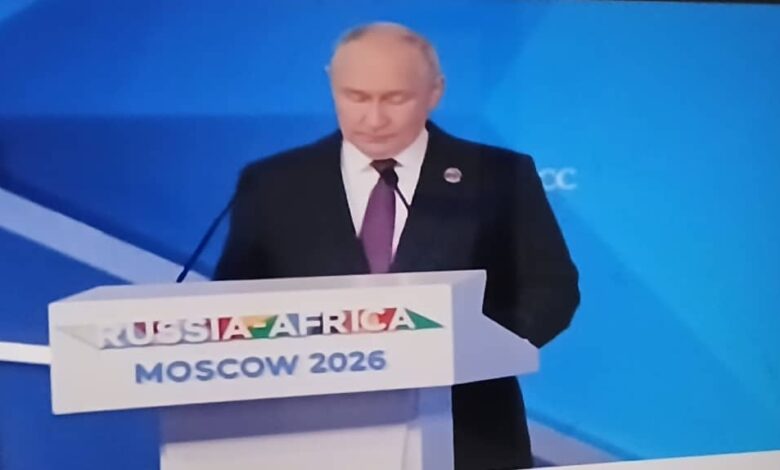
Russian President Vladimir Putin has expressed a desire to see more African journalists working in Russia, raising prospects for stronger media cooperation, professional exchanges and improved understanding of economic opportunities between Russia and African countries.
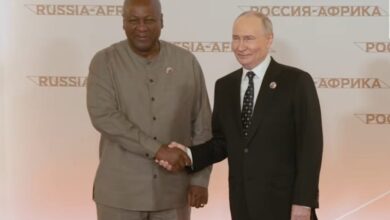
The statement comes as leaders and representatives from across Africa and Russia meet in Moscow for the third Russia-Africa Summit on October 28 and 29, 2026, to explore deeper cooperation in trade, investment, energy, agriculture, technology and other strategic sectors.
For African journalists, the development presents an opportunity to move beyond conventional diplomatic reporting and provide practical information to businesses, investors and citizens seeking to understand opportunities in both markets.
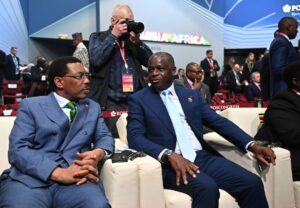
The accompanying Russia–Africa Media Forum has brought together more than 200 participants from 46 African countries, including journalists, media executives, regulators and digital content creators. Discussions are focusing on joint broadcasting, content exchange, professional training and the international representation of African countries.
A stronger media presence in Russia could help address information gaps that often confront African businesses seeking to enter the Russian market. These include regulations, distribution networks, consumer demand, payment arrangements and access to credible business partners.
Similarly, Russian companies exploring African markets could benefit from reliable reporting on local business conditions, investment requirements and commercial risks.
For Ghanaian businesses, sustained coverage could highlight opportunities in agricultural processing, food exports, manufacturing, logistics, mining services and technology, subject to the relevant commercial and regulatory requirements.
Rather than focusing solely on diplomatic announcements, journalists could track agreements from their signing through implementation, examining whether promised investments and partnerships are delivering tangible results.
Economic cooperation remains a major focus of the Moscow summit. Russian officials have said trade between Russia and African countries exceeded $27 billion in 2025, representing an increase of roughly one-third compared with the level at the time of the 2023 summit,
The challenge, however, is to translate growing trade relations and high-level commitments into practical benefits for African economies, including market access, technology transfer, investment and industrial development.
For Ghana, potential areas of interest include agricultural value addition, energy, technical education, scientific research and manufacturing. The actual benefits will depend on the terms of individual agreements, financing arrangements, local participation and the competitiveness of Ghanaian businesses.
African journalists based in Russia could help make these developments more accessible to audiences at home while providing independent assessments of the opportunities and risks involved.
The initiative also presents an opportunity to broaden international reporting. Coverage of Russia–Africa relations has often centred on diplomacy, military cooperation and geopolitical competition. Greater attention to trade, employment, technology and industrial development could help audiences better understand how international relations affect their daily lives.
For example, journalists could investigate whether Russian agricultural technologies can be adapted to African farming conditions, how industrial partnerships might support local manufacturing, and what Ghanaian exporters must do to access Russian markets.
Such reporting must go beyond promotional claims to examine costs, benefits, risks and the conditions attached to proposed partnerships. African countries are not a single market, and opportunities in Ghana may differ significantly from those in Kenya, Egypt, South Africa and other economies.
However, closer media cooperation also raises questions about editorial independence, access to information and the freedom to scrutinise powerful institutions.
Partnerships between African and Russian media organisations could provide access to new sources, professional training and international distribution networks. Their credibility, however, would depend on transparent funding, clear editorial safeguards and the ability of journalists to verify claims independently.
For Ghanaian media organisations, the renewed focus on Russia–Africa relations could create opportunities for correspondent arrangements, joint investigations, professional exchanges and specialised business reporting.
Journalists could provide regular coverage of trade missions, business exhibitions, educational exchanges and developments in science and technology. They could also examine practical requirements for Ghanaian companies seeking Russian partners, including product standards, shipping, insurance, payment channels and applicable sanctions or other legal restrictions.
Such reporting would help entrepreneurs distinguish viable commercial opportunities from announcements that have yet to produce measurable results.
Putin’s expressed interest in seeing more African journalists working in Russia comes as Moscow seeks to strengthen its engagement with the continent across several sectors.
Whether the statement leads to lasting opportunities will depend on practical arrangements for employment, access, training and exchanges between media organisations.
For Africa, the priority should be ensuring that such cooperation serves the continent’s interests. More African journalists working in Russia could broaden international coverage, improve understanding of markets and institutions, and equip businesses with information for informed decisions.
Ultimately, success should not be measured by the number of journalists travelling to Moscow, but by the quality of their reporting, the professional opportunities created and the extent to which audiences gain a clearer, independently verified understanding of the opportunities and challenges shaping Russia–Africa relations.