
AU Chair Urges Direct Russia-Africa Business Ties to Drive Investment, Jobs and Industrial Growth

|
Getting your Trinity Audio player ready...
|
By Ahoto John Justice
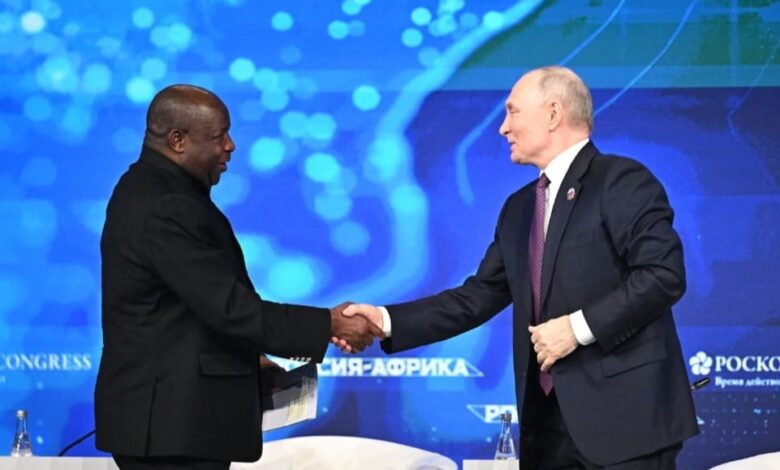
African Union Chairperson and Burundi President Évariste Ndayishimiye has called on Russian companies to respond more actively to Africa’s economic needs, highlighting opportunities for expanded business cooperation in energy, agriculture, manufacturing, infrastructure and technology.
Speaking at the plenary session of the Russia-Africa Economic and Humanitarian Forum in Moscow on Wednesday, October 28, 2026, Mr Ndayishimiye said Russia’s industrial, scientific and energy capabilities could contribute to economic cooperation through practical solutions in trade, financing and payment systems.
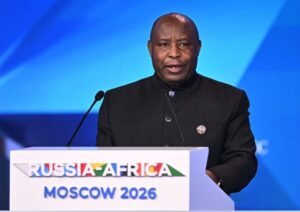
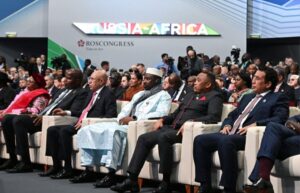
His call comes as African leaders and delegations meet Russian officials and business representatives at the third Russia-Africa Summit, scheduled for October 28–29, to explore ways of expanding economic relations and strengthening commercial partnerships.
For African countries,
the central question is whether closer direct business relationships with Russian companies can translate into affordable production inputs, new investment, employment opportunities and greater local manufacturing capacity.
Trade between Russia and African countries exceeded $27 billion in 2025, according to figures cited by Russian presidential foreign policy aide Yuri Ushakov ahead of the summit. The figure indicates growing commercial activity, although the distribution of trade and investment benefits across African countries remains an important consideration.
A major opportunity lies in agriculture, where Russian wheat and fertilisers could support African food production and help countries address supply shortages. Beyond importing finished products, African businesses could pursue partnerships in fertiliser distribution, agricultural machinery, irrigation, storage facilities, food processing and the development of more efficient supply chains.
Such arrangements could help farmers improve productivity while enabling local businesses to participate in the wider agricultural value chain.
However, the actual impact on food prices and farm incomes would depend on import costs, transport charges, financing conditions and how efficiently products reach farmers and consumers.
Industrial development is another potential area of cooperation. African governments and private companies could negotiate partnerships with Russian manufacturers to establish or expand production facilities, supply industrial equipment and develop local technical capabilities.
Rather than relying exclusively on imported finished goods,
African countries could seek agreements that include local assembly, skills development, technology transfer and the training of African engineers and technicians.
These arrangements could create employment and support the development of local industries, provided that investment agreements contain clear commitments on local participation and measurable economic benefits.
Energy cooperation could also offer opportunities for African economies seeking reliable electricity to support manufacturing, mining, digital services and other productive activities.
Russia has experience in conventional power generation and nuclear energy through state-owned nuclear corporation Rosatom. Cooperation in this sector could include technical training, infrastructure development and long-term energy projects, subject to national regulatory requirements, financing arrangements and environmental and safety standards.
Infrastructure and technology are also expected to feature prominently in discussions.
Better transport connections, storage facilities, digital systems and industrial infrastructure could reduce the cost of moving goods and help African businesses reach markets across the continent.
For Ghana and other African countries, stronger commercial links could create opportunities for exporters, importers, manufacturers and small and medium-sized enterprises to identify Russian buyers, source equipment and negotiate business-to-business agreements.
African companies could also explore opportunities to export processed agricultural products, manufactured goods and other value-added products to Russian markets. However, the commercial prospects would depend on product demand, market access requirements, certification, transport costs and the ability of businesses to compete on price and quality.
Direct business engagement could help companies reduce reliance on unnecessary intermediaries and negotiate supply contracts more closely with producers. Yet direct trade would not automatically guarantee lower prices or better returns; those outcomes would depend on competition, contract terms, payment arrangements and the reliability of supply chains.
Payment systems and trade financing are therefore critical to the success of the proposed partnership. Businesses need reliable ways to settle transactions, obtain credit, insure shipments and manage currency and delivery risks.
The forum is expected to address trade, investment, independent payment systems, food security and technology, alongside other areas of cooperation. Participants are also expected to consider a Russia-Africa Partnership Forum action plan for 2027–2029.
For African governments, the challenge will be to convert discussions and memorandums of understanding into funded projects, enforceable contracts and investments that generate measurable economic returns.
This will require transparent procurement, commercially viable financing, careful assessment of debt obligations and safeguards against projects that depend excessively on imported labour or equipment without building local capacity.
African countries will also need to assess the implications of international sanctions and restrictions affecting some Russian financial institutions and businesses, particularly where these could complicate payments, insurance, shipping or access to international markets.
The summit therefore presents an opportunity for African businesses to diversify their trading relationships while insisting on terms that support domestic production, skills transfer and long-term economic development.
For the continent, the ultimate measure of success will not be the number of agreements signed or the volume of goods exchanged, but whether closer cooperation produces more competitive African businesses, stronger local industries, sustainable employment and greater value from the continent’s resources.