
From Flooded Streets to Festival Streets: What Ghana Can Learn from Korea’s Jinju Lantern Festival

|
Getting your Trinity Audio player ready...
|
By John Justice Ahoto
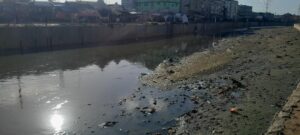
Every rainy season, the same grim headlines return. Lives lost. Homes submerged. Businesses crippled. In Ghana’s capital Accra, flooding has become a deadly ritual, and the causes are no mystery.
Solid waste is dumped indiscriminately into open drains. Choked gutters overflow at the first sign of rain. Natural waterways are blocked or diverted to make way for unplanned buildings. Beyond the city, our river bodies are under siege from illegal miners whose activities, known locally as _galamsey_, have turned once-pristine water sources into muddy, toxic streams.
Successive governments, past and present, have announced policies, task forces, and demolitions. Yet the problem persists. The result is not just humanitarian tragedy. It is economic hemorrhage.
The human toll is staggering. The June 3, 2015 disaster alone claimed over 150 lives when flash floods combined with a petrol station explosion in Accra (Reuters, 2015). But the deaths did not stop there. In the last two decades, an estimated 400 people have been killed and around 4 million displaced by flooding nationwide Since 1935, the count exceeds 3,000 deaths and 700,000 displaced .Behind each number is a family, a livelihood, a future cut short.
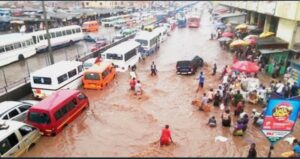
The economic cost is just as severe. The World Bank estimates flooding and drought cost Ghana $200 million every year (World Bank, 2023). The 2015 disaster caused major damage and losses amounting to $55 million, with an estimated $105 million reconstruction cost (World Bank, 2023). Between 2013 and 2023, floods affected over 110,813 households and caused economic losses of $1.7 billion, or 20 billion Ghana Cedis according to NADMO records.Traders lose inventory. Roads collapse. Investors hesitate.
And the revenue loss goes deeper. While Accra drowns, other nations turn water into wealth. In Europe, America, and Asia, urban canals and rivers have been re-engineered into tourism magnets and trade arteries. Venice’s canals, Amsterdam’s waterways, and San Antonio’s River Walk generate billions yearly. Water, properly managed, is an asset. Mismanaged, it is a liability.
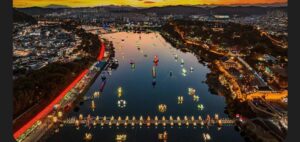
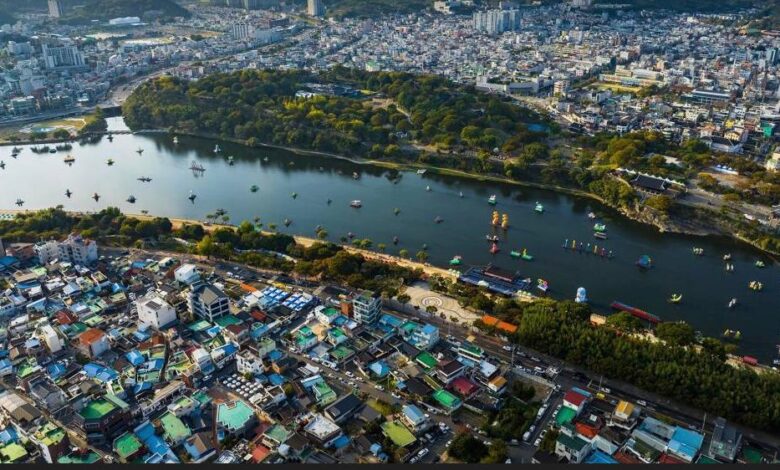
South Korea offers a compelling contrast. The city of Jinju, once a battlefield, now hosts one of Asia’s most celebrated cultural events: the _Jinju Namgang Yudeung Lantern Festival_.
In 1592, during the Japanese invasion, defenders at Jinjuseong Fortress floated oil lanterns, _yudeung_, on the Namgang River. The lanterns blocked enemy crossings and served as signals to families outside the fortress walls (Jinju City, n.d.). For over 400 years, Jinju remembered this history.
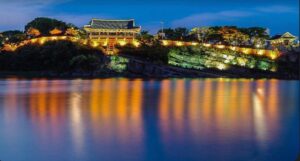
Every October, for two weeks, the Namgang River is covered with over 70,000 lanterns. Dragons, historical figures, cartoon characters, and “wish lanterns” create a world of light on water. The Jinjuseong castle grounds open free to the public. Fireworks, food trucks, river cruises, and light shows transform the city.
_The economic impact_: In 2026, Korea’s Ministry of Culture, Sports and Tourism designated the Jinju Namgang Lantern Festival as a “global festival,” allocating 800 million won ($540,000) annually for three years to promote it worldwide
The festival draws over 2.8 million visitors annually, including international tourists
(Tripadvisor, 2026). Jinju is now branded “The City Where Night Shines Brightest.A 400-year-old memory became a modern revenue stream.
Jinju did not have natural advantages. It had a polluted river, a history of war, and limited land. What it did have was vision: turn a waterway into a story, and turn that story into an economy. Ghana’s water bodies could do the same.
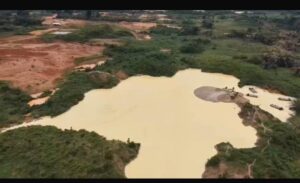
The Odaw River, Korle Lagoon, and Densu River are currently symbols of filth. With desilting, proper waste management, and beautification, they could become Accra’s version of the Namgang. Imagine “Odaw Light Festival” with lanterns telling the story of Ghana’s independence, chieftaincy, and resilience.
Jinju sells wish lanterns, boat rides, and food. Ghana’s festivals already attract diaspora visitors. Water-based festivals along cleaned rivers would extend tourist stays and spending.
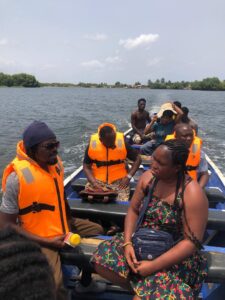
Before roads, Ghana’s Volta River was a trade highway. Desilted and protected from _galamsey_, our rivers can move goods, reduce road congestion, and open eco-tourism.
Learning from Jinju means first solving the fundamentals. Ghana cannot host a lantern festival on a lagoon of plastic.
Ghana can adopt this five non-negotiable steps in it’s transformation plans
_Enforce a national sanitation code_: Ban building on waterways. Demolish structures blocking natural drainage paths and prosecute officials who approved them. Singapore jailed officials for illegal permits in the 1970s. It worked.
Decentralize waste management with accountability.
Metropolitan assemblies must publish monthly data on tonnes of waste collected vs. tonnes dumped at landfills. Use GPS-tracked waste trucks like Rwanda’s Kigali model.
By Adopting the “polluter pays” principle
Businesses producing plastic must fund recycling. Ghana generates 1.1 million tonnes of plastic waste yearly; only about 5% is recycled (IUCN NL, 2023).
Deploy galamsey technology, not just soldiers.
Use drones and satellite monitoring to track river turbidity in real time. Freeze assets of illegal mining financiers. Military operations without financial penalties have failed for a decade.
Create Waterway Development Authorities.
Like Ghana Ports and Harbours Authority, a dedicated body should own, dredge, protect, and monetize major urban rivers. Its KPI: convert 100km of urban waterways into economic zones by 2030.
Jinju turned a 1592 military tactic into a 21st century tourism product. Accra is turning 21st century plastic into 19th century cholera.
The difference is not money. Korea was poorer than Ghana in 1960. The difference is political will to see water as infrastructure, culture as capital, and festivals as foreign exchange.
Ghana loses $200 million a year to floods and has buried over 400 people in the last two decades alone World Bank, 2023). Jinju makes millions from a river. One city drowns in waste. The other dances in light.
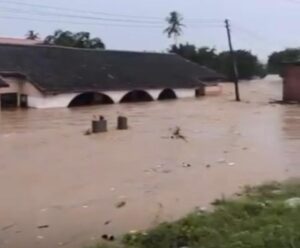
The rains will come again next June. The question is whether they will meet us with drains or with designs. With excuses or with enterprise.
“Are we going to keep mourning lives every rainy season, or we start building lanterns.”???