
Food Trade In West Africa Is About Ten Billion Dollars, Official Figure Inaccurate

|
Getting your Trinity Audio player ready...
|
By Edward Graham Sebbie
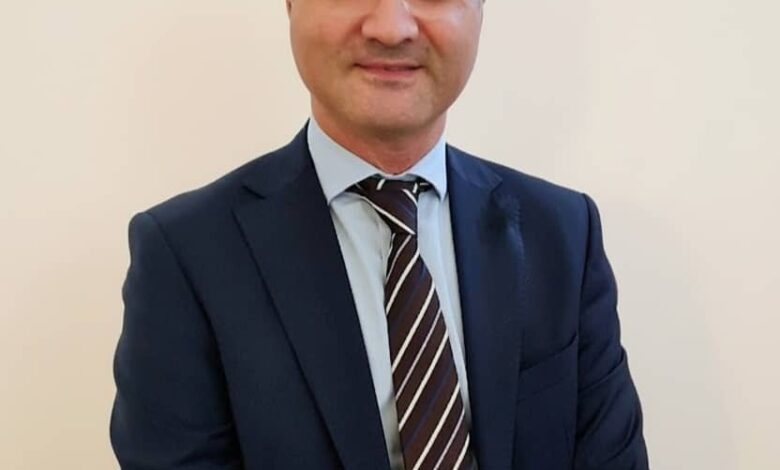
A statistician and trade advocate, Ziad Hamoui, has challenged officialdom figure on food trade in West Africa, putting out a new figure from a latest research as evidence.
The fresh research conducted by OECD-OCDE estimates food trade in the West Africa sub-region at almost 10 billion dollars per annum.
The latest figure is about six times higher than an official statistic of 1.7 billion often put out by policymakers.
Mr. Hamoui, who is also and founding member of Borderless Alliance, says the gap exists because there is no data on the massive volumes of goods that crossing borders in the sub-region. “These traders are not smugglers, but legitimate economic actors who are operating outside the recognize system” he disclosed.
He reveals that aside from Cocoa and Cashew exports, close to 38% of West Africa’s food trade stays within the region, compared to what occurs in the European Union. “Yet policy debates always cite the 15% figure derived from incomplete official statistics” he emphasised.
On food security, he disclosed that 68 trillion kilocalories cross West African borders annually, a figure enough to meet the annual energy needs of 80 million people comprising about a quarter of the regional population. In terms of protein, 2.6 billion kilograms of livestock and fish move regionally each year.
This, he noted is not small-scale, short-distance and subsistence trade, adding that West African countries trade with a median of 12 partners out of 14 possible. “Major exporters like Senegal, Ghana and La Côte d’Ivoire conduct almost 60% of West African Regional food trade with non-neighboring countries. He further hints.
Mr. Hamoui continued that, experience at Borderless Alliance uncovered relentless flow of goods at border crossings and engaging with thousands of traders across the region, a substantial stade volume which unfortunately could not be captured in official reports.
“Ghana’s maiden Informal Cross-Border Trade Survey in late 2024, indicates that informal trade accounted for 61.2% of total trade with Togo and 55.7% with Côte d’Ivoire. We have been designing policies for a formal economy that represents a minority of actual commerce” Mr. Hamoui also disclosed.
He noted that “You cannot manage what you cannot measure, and certainly cannot design effective food security strategies, infrastructure investments, or trade facilitation measures when your baseline data captures only a fraction of the actual economy”.
Just as in the roads, ports and border posts, he called for similar investment in the statistical infrastructure that tells where those investments should actually be channeled.
He therefore expressed appreciation to OECD – OCDE and ECOWAS Commission for this critical research through the ECOWAS Agricultural Trade Programme. The path to evidence-based policy according to him starts with seeing the economy which actually exists.