

|
Getting your Trinity Audio player ready...
|
By Samuel Asamoah
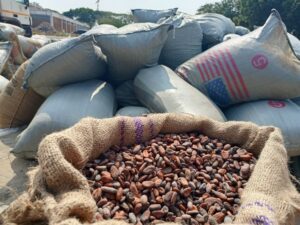
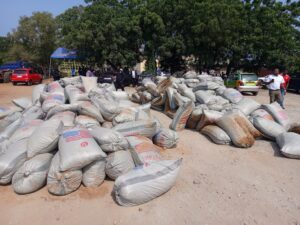
The Ada District Police Command has arrested three men for allegedly attempting to smuggle 248 bags of cocoa beans concealed in tipper trucks at Big-Ada in the Greater Accra Region.
According to a police statement issued by the Tema Regional Police Public Affairs Unit, the arrests occurred on Wednesday, September 10, 2025, at about 5:00 p.m. when a patrol team intercepted two double axle tipper trucks near Ada Senior High School.
The vehicles — a green SHACMAN tipper truck with registration number GN 6953-22 driven by 28-year-old Solomon Tetteh, and an orange CNHTC tipper truck with registration number GR 9877-12 driven by 27-year-old Nicholas Tetteh — were found to be carrying cocoa beans suspected to be bound for smuggling.
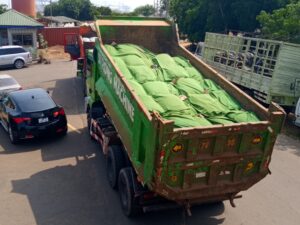
A search of the trucks revealed 248 bags of cocoa beans concealed in jute and nylon sacks. Police subsequently arrested the drivers and the alleged owner of the consignment, 36-year-old Stephen Okronipa.
The suspects are currently in police custody while investigations continue. Both vehicles have been impounded, and the intercepted cocoa beans have been handed over to COCOBOD in Tema for safekeeping.
ASP Dede Dzakpasu, Head of Public Affairs at the Tema Regional Police Command, cautioned transport operators and traders against engaging in smuggling activities, warning that anyone found aiding or abetting such illegal trade would be prosecuted.
Cocoa smuggling has long been a concern for authorities, as it undermines Ghana’s economy and threatens the livelihoods of farmers who depend on the regulated cocoa industry.
Police Intercept Truckload of Smuggled Cocoa Beans in Ada, Three Suspects Arrested