
Marine Wildlife Under Serious Threat as Illegal Sea Turtle Hunting Surges in Volta Region

|
Getting your Trinity Audio player ready...
|
Marine wildlife along Ghana’s eastern coastline is facing renewed danger as illegal sea turtle hunting gains momentum across parts of the Volta Region, raising alarm among conservationists and coastal community leaders.
Investigations by Voiceafricaonline reveal that the three coastal municipalities — Anloga, Keta and Ketu South — are increasingly becoming hotspots for marine-related offences, with turtle poaching emerging as a thriving illegal activity.
The development comes despite years of sensitisation campaigns and protective measures spearheaded by the Forestry Commission, local landing beach committees and civil society advocates.
Commercialised Poaching on the Rise
Although illegal, unreported and unregulated (IUU) fishing has long plagued Ghana’s coastline, community sources say sea turtle hunting is now expanding beyond subsistence consumption to commercial trade.
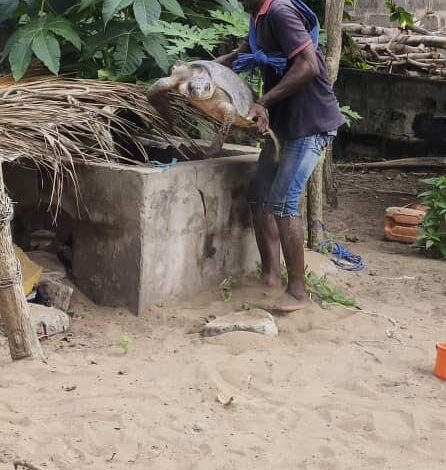
The meat of the endangered reptiles is said to be gaining popularity among some residents, with perpetrators allegedly processing and selling the meat in local markets.
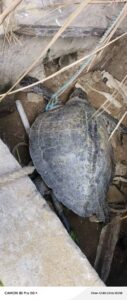
Saviour Akorli, leader of the Woe Community Fisheries Taskforce, disclosed that the illegal practice intensifies in the final quarter of the year when turtles come ashore to lay eggs.
He explained that most of the poaching occurs at night, complicating enforcement efforts.
“They usually operate under the cover of darkness when the turtles are nesting. By the time we get there, the damage has already been done,” he said, appealing for urgent intervention from the relevant authorities.

Enforcement Struggles and Environmental Pressures
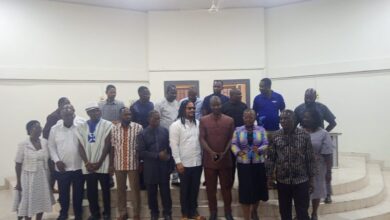
Vincent Kwaku Adedze, Chairman of the Vuti-Srogbe Landing Beach Enforcement Committee, said his team works in collaboration with the Forestry Commission to identify and secure turtle nesting sites.
However, he lamented that some residents return to raid the nests after patrol teams leave the beaches.
He further attributed the declining turtle population to the combined effects of poaching, climate change, plastic pollution and persistent high tides that destroy nesting grounds.
Environmental observers warn that the cumulative pressure from human and environmental factors could worsen the fragile state of marine biodiversity in the region.Ecological and Economic Significance
The Executive Director of the Centre for International Maritime Affairs Ghana (CIMAG), Albert Derrick Fiatui, stressed that sea turtles play a critical ecological role.
According to him, turtles contribute to healthy marine ecosystems by influencing fish migration and spawning patterns in colder waters, a process essential for replenishing ocean fish stocks.
He also noted long-held beliefs within some fishing communities that turtles serve as natural guides, helping fishermen who lose their bearings at sea find their way back to shore.
Only Three Species Commonly Sighted
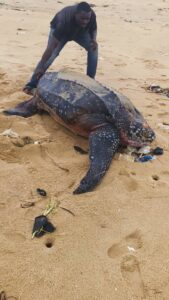
Marine research indicates that of the seven species of sea turtles historically associated with Ghana’s coastline, only three are now commonly sighted — a trend conservationists describe as deeply troubling.
Globally, close to 95 percent of poached turtles are Green and Hawksbill species, hunted for their meat, shells and eggs. Major illegal activities have been recorded in Southeast Asia, Madagascar and parts of the Coral Triangle.
Stakeholders are therefore calling for intensified collaboration among state agencies, traditional authorities and coastal communities to curb the practice before irreversible damage is done.
Without decisive and sustained intervention, experts caution that the survival of the remaining turtle species along Ghana’s coast could be severely compromised, with long-term consequences for marine ecosystems and the livelihoods of fishing communities.