
|
Getting your Trinity Audio player ready...
|
By Samuel Asamoah
As Ghana races to shield vulnerable coastal communities from the destructive force of tidal waves through the construction of rock revetments under the West Africa Coastal Areas (WACA) programme, a new environmental concern is emerging along the eastern shoreline — the potential destruction of critical sea turtle nesting and hatchery sites.
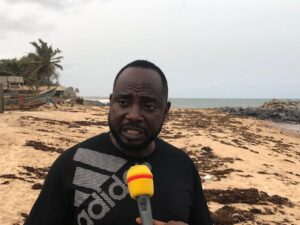
The Center for International Maritime Affairs Ghana is raising red flags over the ecological cost of ongoing sea defence works in the Ketu South Municipality, particularly in Keta and adjoining coastal communities such as Blekusu. While acknowledge the urgency of protecting life and property from coastal erosion, the organisation is urging authorities and contractors to adopt a more balanced ecosystem-sensitive approach.
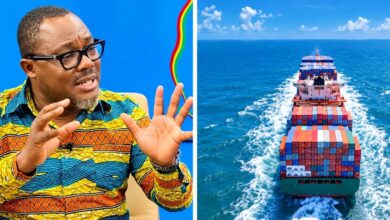
“We cannot solve one environmental crisis by creating another,” said Albert Derrick Fiatui, Executive Secretary of CIMAG, following a monitoring visit to project sites. “These coastal stretches are not just human settlements; they are vital breeding grounds for vulnerable and endangered sea turtles whose survival is already severely threated.”
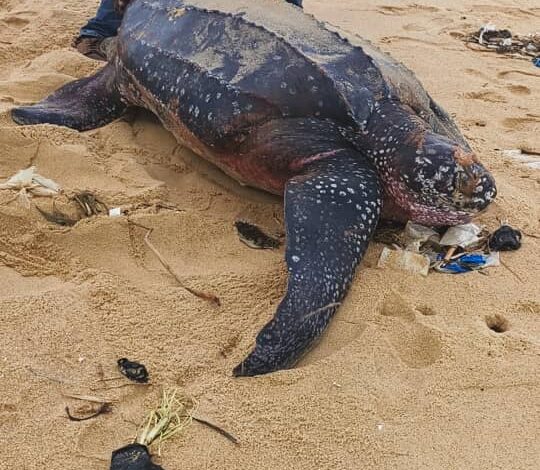
Sea turtles — including species such as the Olive ridley sea turtle and Green sea turtle — depend on undisturbed sandy beaches to lay their eggs. Female turtles often return to the same nesting grounds where they were born, making the preservation of these sites critical for species continuity.
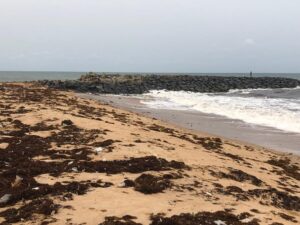
Environmental experts explain that hatcheries, which are protected areas where turtle eggs are relocated or closely monitored, significantly improve hatchling survival rates by shielding them from predators, flooding, and human interference. However, large-scale coastal engineering works, including rock armouring and shoreline reshaping, can disrupt nesting patterns, harden beaches, and destroy suitable laying grounds entirely.
According to the World Wildlife Fund, all seven species of sea turtles are either threatened or endangered, with habitat loss ranking among the leading causes of their global decline.
The Keta coastal defence project forms part of broader national and regional interventions aimed at combating coastal erosion largely caised by high tides, which has displaced thousands and destroyed homes, schools, and livelihoods along Ghana’s eastern seaboard. Communities in Keta, Blekusu, and neighbouring areas have long demanded urgent action as tidal waves continue to eat away the coastline.
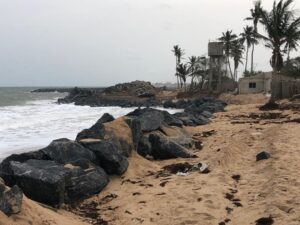
Yet, CIMAG insists that sustainable coastal protection must integrate biodiversity safeguards into engineering designs. Mr. Fiatui emphasised that the blue economy depends on healthy marine ecosystems, warning that undermining biodiversity weakens long-term coastal resilience, declined fishe stock, and eco-tourism potential.
Sea turtles play a crucial role in maintaining marine ecosystem balance. They help regulate jellyfish populations, support healthy seagrass beds, and contribute to nutrient cycling between marine and beach environments, making their conservation both an ecological and economic imperative.
CIMAG is therefore advocating a series of mitigation measures that would allow development and conservation to coexist. The organisation is calling for proper mapping and demarcation of active nesting sites before the construction progresses further, the establishment of protected hatchery zones along less disturbed coastal stretches, and stronger collaboration with local communities to monitor turtle activity. It is also urging the integration of softer engineering approaches where feasible, such as beach nourishment, alongside periodic environmental impact reassessments to reflect emerging biodiversity concerns.
CIMAG therefore appeals for donor support to finance hatchery protection initiatives and community-based conservation programmes to safeguard these vulnerable species.
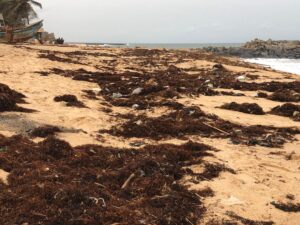
Local fishermen and residents, while welcoming the sea defence project, have expressed mixed feelings about its environmental implications, noting that turtle sightings appear to be declining in areas where heavy construction activity is ongoing close to the shoreline.
Marine conservationists warn that the loss of nesting grounds could have wider implications beyond biodiversity, including reduced marine productivity and missed opportunities for eco-tourism development.
Ghana’s coastline remains one of the most vulnerable in West Africa, with rising sea levels and climate variability intensifying erosion risks. Experts say climate adaptation strategies must increasingly combine engineered solutions with nature-based approaches to ensure long-term sustainability.
For CIMAG, the message remains unequivocal. As efforts intensify to defend coastal communities, equal attention must be paid to protecting the marine ecosystems that sustain them.