

Economics Industrialization Empowerment
GRATIS–WFP programme empowers 231 youth artisans

|
Getting your Trinity Audio player ready...
|
By Laudia Anyorkor Nunoo, Sourced from GNA
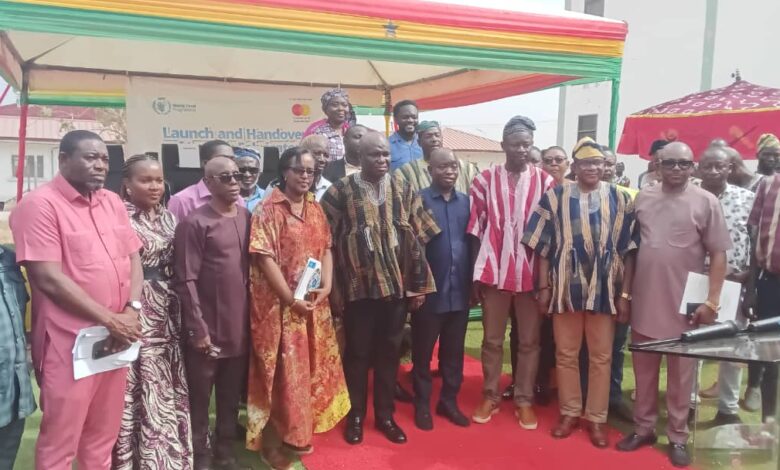
The Ghana Regional Appropriate Technology Industrial Service (GRATIS) Foundation, in partnership with the World Food Programme (WFP), has trained 231 youth artisans in post-harvest equipment fabrication to strengthen food security, promote local industrialization and expand agro-processing capacity.
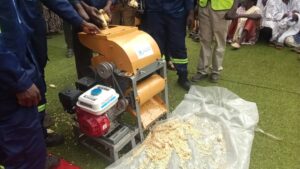
The programme, outdoored at a ceremony in Savelugu in the Northern Region, provided an intensive hands-on training at seven GRATIS Foundation Rural Technology Centres nationwide, where participants acquired advanced fabrication skills using modern engineering machinery.
Under the supervision of GRATIS engineers, the trained artisans locally manufactured 300 maize and soya threshers, demonstrating Ghana’s growing capacity for domestic production of agricultural machinery.
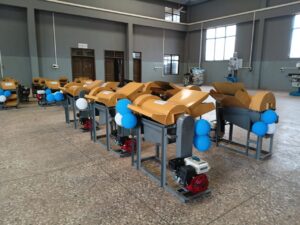
The initiative, according to the GRATIS, supports government efforts to promote industrialization, job creation, youth empowerment and value addition within the agricultural sector through local manufacturing and skills development.
Dr Isaac Adaebsah, the Chief Executive Officer of the GRATIS Foundation, reaffirmed the institution’s commitment to supporting Ghana’s industrial transformation agenda.
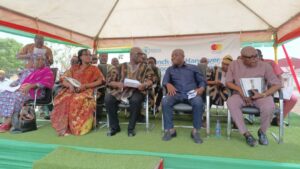
Dr Adaebsah commended the World Food Programme for its sustained partnership and confidence in local institutions to deliver development-driven outcomes.
He said the programme will help reduce post-harvest losses and create sustainable employment for the youth.
He noted that the fabricated threshers would be distributed to women smallholder farmers and agribusinesses across the northern part of the country to improve productivity, reduce losses and strengthen food systems.
Stakeholders reaffirmed their commitment to youth empowerment, local technology development and sustainable agricultural transformation, noting that the initiative demonstrated the value of collaboration between government, development partners and local institutions.
They acknowledged that such partnerships were essential to advancing agro-industrial development, creating decent jobs and strengthening food security through locally driven solutions.