
Jinju’s River of Light: How a Historic Lantern Festival Became a Global Cultural Powerhouse

|
Getting your Trinity Audio player ready...
|
By Justice Ahoto
In the southern reaches of South Gyeongsang Province, a centuries-old tradition is finding renewed global resonance. The Jinju Namgang Yudeung Festival is a breathtaking display of floating lanterns illuminating the Namgang River, has been officially elevated to ‘Global Festival’ status by the Ministry of Culture, Sports and Tourism in partnership with the Korea Tourism Organization.
The designation places the Jinju festival alongside two of South Korea’s most internationally recognised cultural events—the Boryeong Mud Festival and the Andong International Mask Dance Festival—signalling its growing stature on the global tourism stage.
A Festival Rooted in War, Reimagined for Peace
What sets the Jinju Namgang Yudeung Festival apart is not just its visual splendour but the depth of its historical roots. The lantern tradition dates back to the Imjin War, specifically the Battle of Jinju. During the first siege in 1592, General Kim Si-min and a vastly outnumbered force used floating lanterns—yudeung—as a tactical tool to deter enemy crossings under the cover of darkness.
But the symbolism of the lanterns evolved in the aftermath of tragedy. When Jinju Fortress fell during the second siege, tens of thousands perished. The floating lanterns became a solemn tribute, honouring the souls lost in one of Korea’s most devastating wartime episodes.
Today, that legacy has transformed into a powerful message of remembrance and peace—one that resonates far beyond Korea’s borders.
From Local Heritage to Global Attraction
The elevation to Global Festival status is more than symbolic; it comes with significant investment. Jinju is set to receive 2.4 billion Korean won over three years, aimed at transforming the festival into a world-class tourism product capable of attracting at least 80,000 international visitors annually.
City authorities are shifting focus from short visits to immersive, “stay-type” tourism—encouraging visitors to experience not just the festival but the wider cultural and natural offerings of the region. Plans include multilingual services to eliminate language barriers and the development of what officials describe as “global signature content,” building on the festival’s identity as a large-scale water lantern spectacle.
There is also a strategic regional dimension. Jinju is partnering with neighbouring jurisdictions—Sacheon, Sancheong County, and Goseong County—to create integrated tourism packages that extend visitor stays and distribute economic benefits across the region.
Economic Promise and Cultural Diplomacy
The ambitions are bold. Over the three-year designation period, Jinju aims to draw two million visitors and generate an estimated 340 billion won in direct economic activity, alongside more than 2,600 jobs.
Yet beyond the numbers lies a deeper aspiration: positioning Jinju as a global “city of light and peace.” The festival’s organisers see its recognition as validation of its competitiveness in an increasingly crowded global festival market.
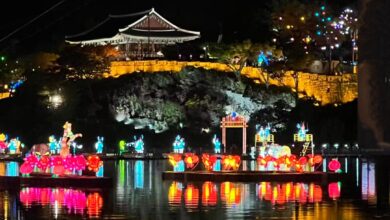
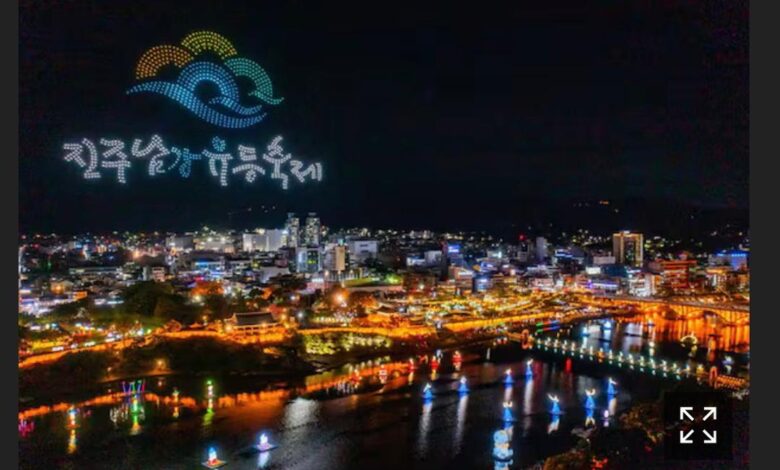
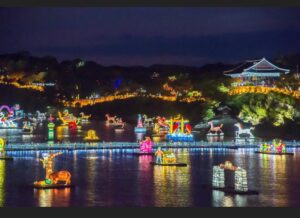
Already, the event’s trajectory supports that claim. From its origins as part of the Gaecheon Arts Festival, it became an independent event in 2000. Since then, it has grown into one of South Korea’s most iconic night-time spectacles, with up to 70,000 lanterns lighting up the river and the historic Jinju Fortress. Last year alone, it drew 1.72 million visitors.
Its accolades have followed suit. After receiving the Regional Culture Award in 2023, it was named the ‘Asia Night Festival’ for 2024 by the World Festivals Association—a recognition that paved the way for its latest global status.
A Universal Language of Light
At a time when nations increasingly turn to cultural diplomacy to build bridges, the Jinju Namgang Yudeung Festival offers a compelling narrative: a tradition born in conflict, transformed into a symbol of unity.
As thousands of lanterns drift across the Namgang River each year, they carry with them stories of resilience, remembrance, and renewal—now poised to reach a truly global audience.